
Dr. Poonam Singh receives funding to study sustainable base for greenhouse production
May 21, 2026
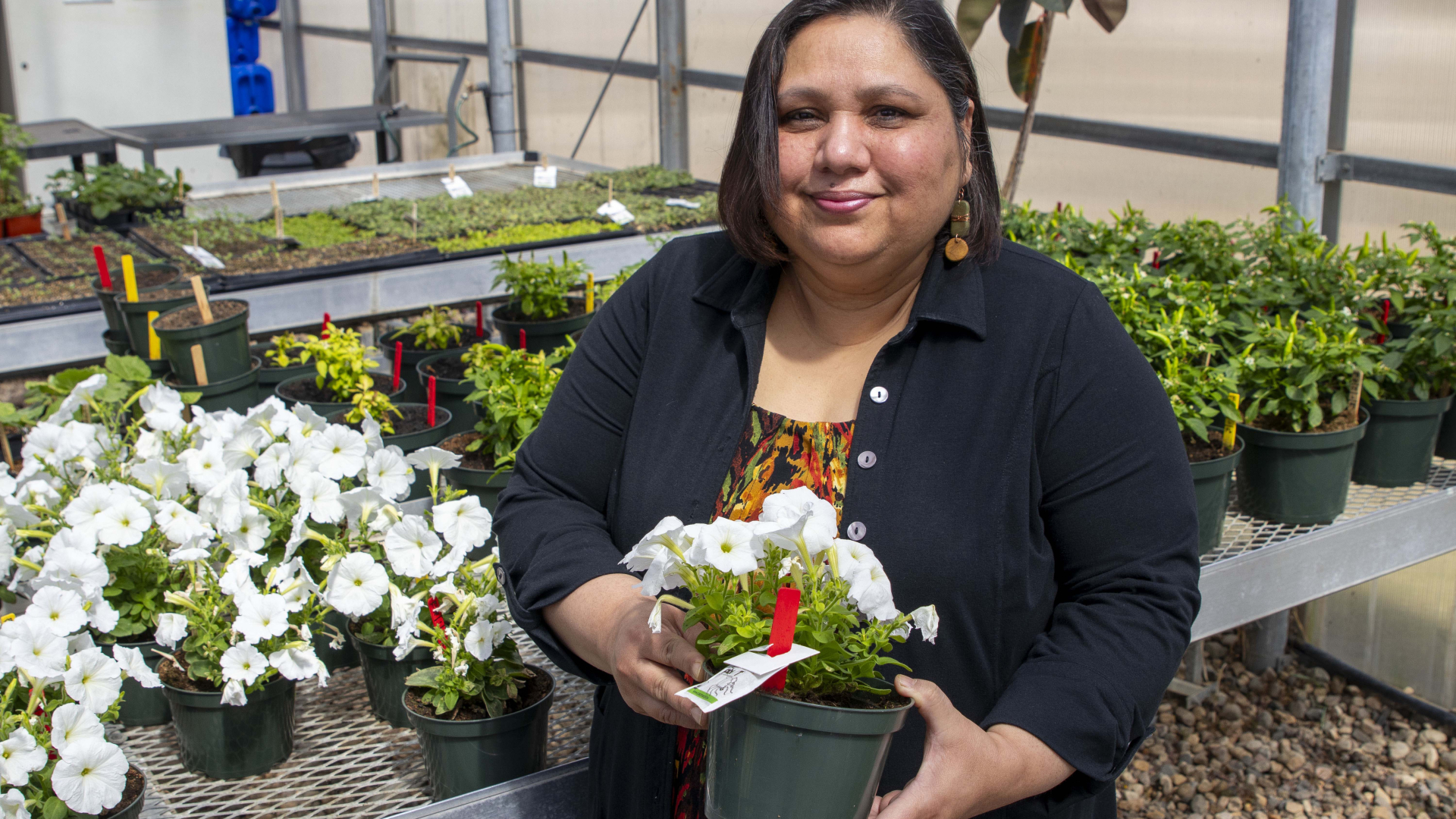
Dr. Poonam Singh's research on more environmentally sustainable ways to grow greenhouse plants has received a $99K boost from the Sustainable Canadian Agricultural Partnership (S-CAP).
Ornamental and nursery plants—which include things like outdoor perennials for home beautification and flower, vegetable and fruit crop production—use peat moss as the primary growing component. Dr. Singh, a faculty researcher in the Russ Edwards School of Agriculture & Environment, is leading an applied research project to help growers reduce environmental impact without compromising plant performance. Her project, 'Exploring potential of biochar and sheep wool waste in ornamental and nursery plant production ' has also received nearly $20,000 in industry investment.
“This most recent funding allows us to turn sustainability research into practical solutions growers can actually use,” Singh said. “It gives us the time and scale needed to properly test new materials before they reach commercial production.”
Peat moss is used for its consistency and growing properties, but is harvested from peat bogs, which play a critical role in carbon sequestration, water retention and biodiversity, so the harvesting of peat is problematic for the environment.
“Peat bogs store enormous amounts of carbon and water, so reducing peat use is an environmental priority,” Singh said. “Even replacing a small percentage of peat can make a meaningful difference when you consider how widely it’s used in horticulture.”
Singh’s research will evaluate whether biochar can partially replace peat in container growing systems.
Biochar is a carbon‑rich material similar to charcoal. It is produced through the high heat and low oxygen processing of organic waste like wood chips, and crop residue. By doing this, the waste materials will not be reduced to ash and can be converted into carbon rich solids. It also helps soil breathe more efficiently, hold water effectively during drier phases, and makes nutrients easier for plants to use, all while storing rich carbon in a stable, long-lasting way. Singhs’ research will explore potential of biochar made from cattails (wetland plants) to be used as a peat extender in soilless media mixes.
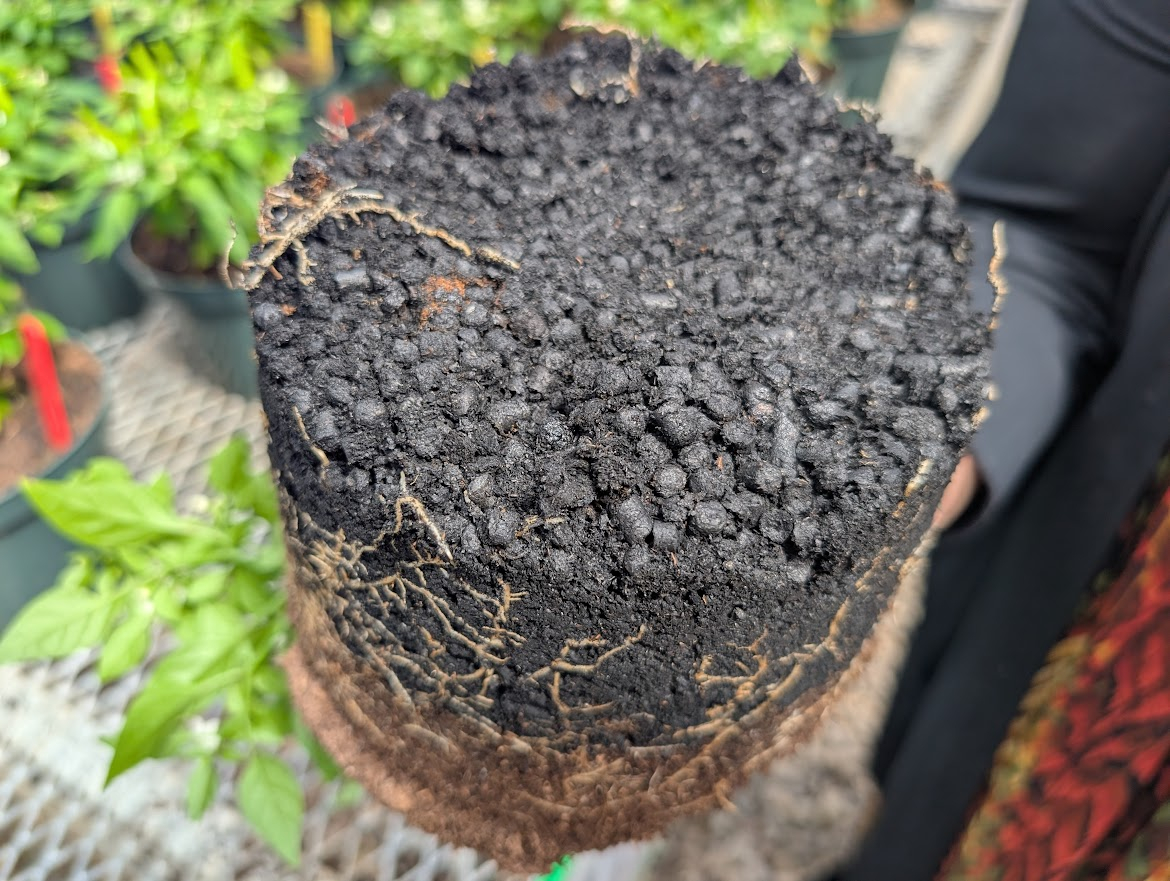
The project will also look to sheep’s wool waste as a potential replacement. Wool has properties that support moisture retention and slow nutrient release, and early trials have shown encouraging results, including strong plant growth and reduced reliance on synthetic fertilizers.
“This most recent example exemplifies our college’s highly successful, unique, signature approach to applied research” said Dr. Deanna Rexe, Vice President, Academic at Assiniboine College. “We proactively work with business and industry to identify priorities for their work, and then we partner to access funding, mobilize our faculty expertise, and include our students in the applied research process as part of our ‘Learn by Doing’ philosophy of education. This knowledge mobilization and training ecosystem works because of our commitment to sustaining quality partnerships that help to strengthen Manitoba’s advantage.”
For her part, Singh said the research recognizes that peat is unlikely to be fully replaced in the near term, but evidence‑based reductions could have significant environmental benefits.
“It’s not just about replacing peat,” she said. “It’s about understanding how alternative materials perform and how they can realistically fit into existing production systems.”
The project is supported by industry and community partners to ensure the research reflects real‑world production conditions, including Carbon Lock Tech, Manitoba Nursery Landscape Association, Canadian Co‑operative Wool Growers Ltd., Sioux Valley Dakota Nation, and Vanderveen Greenhouse.
Partner involvement supports testing across a range of products and growing practices, while also helping identify pathways toward commercialization and adoption.
“This work only happens because industry, communities and researchers are moving in the same direction,” Singh said. “Our partners help develop and process these materials, and we work together to test and refine them so growers can adopt them with confidence.”
Support for applied research in horticulture and ornamental production is a growing area of focus for the S-CAP funding program as an important part of broader sustainability efforts.
Singh said recognizing the environmental footprint of intensive growing systems such as greenhouses and nurseries is an important step in advancing sector‑wide sustainability.
“Assiniboine’s recognition as one of Canada’s Top 50 Research Colleges reflects the applied, industry‑focused work our faculty are doing,” said Chris Budiwski, Dean of the Edwards School. “Dr. Singh’s research is a strong example of how public investment and industry partnerships can support innovation that benefits both producers and the environment.”
As the project moves forward, Singh plans to share findings with growers, industry partners and other researchers to help support real‑world adoption.
For more information about the Sustainable Canadian Agricultural Partnership in Manitoba, visit this link.
Related Articles
Cougars Pep Rally

Assiniboine ECE program coming to Neepawa in 2027

2026 Fall Volleyball