
Primary Care Paramedic
Overview
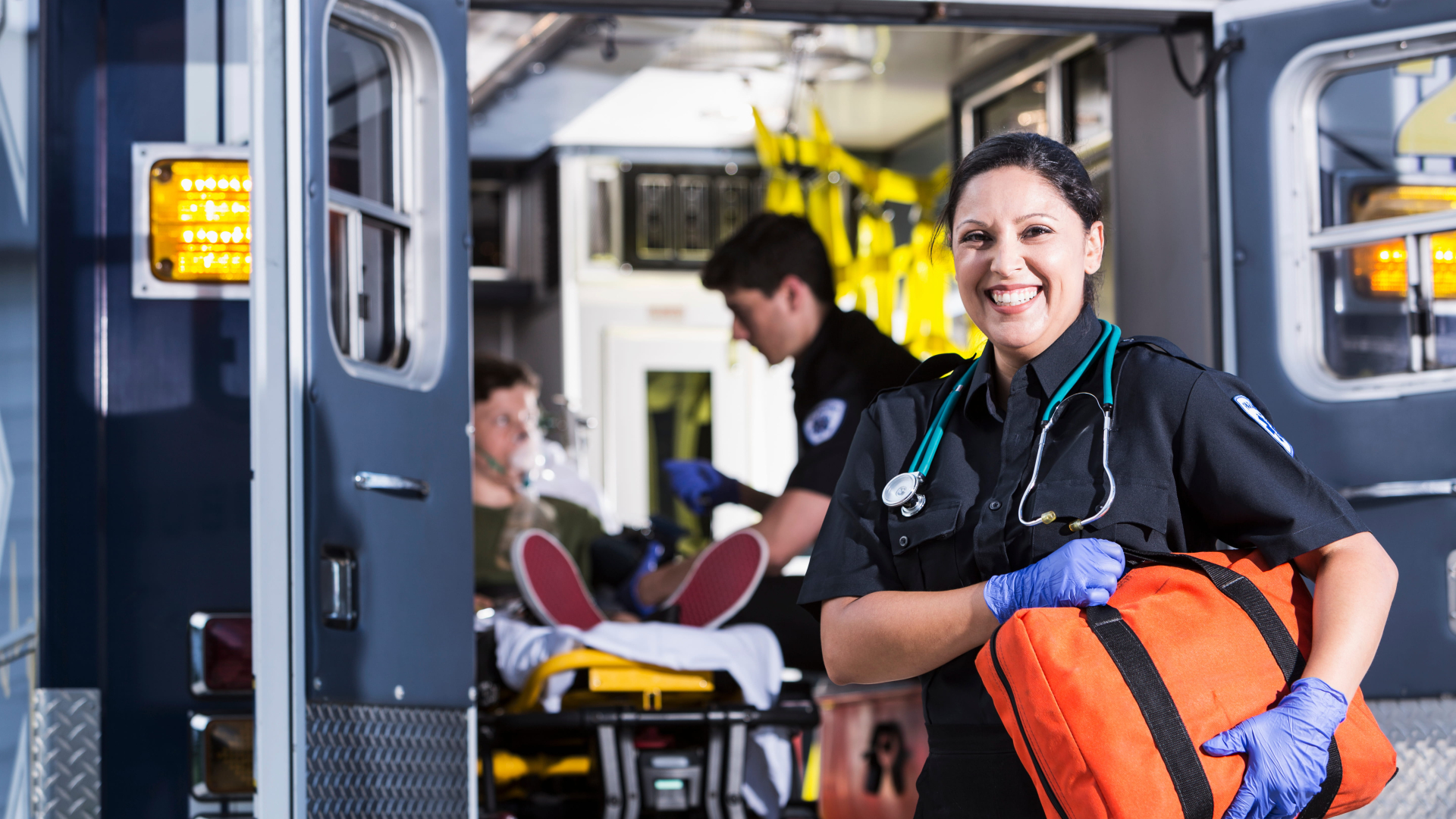
Primary care paramedics (PCP) are essential healthcare providers who respond to both emergency and non-emergency calls, delivering patient care in a variety of settings, including ambulances, industrial sites, air medical transport, and community-based environments.
The PCP program is expected to develop key skills in basic and limited advanced life support, including airway management, defibrillation, IV therapy, and medication administration. With a strong emphasis on patient assessment and clinical decision-making, this program will prepare graduates to handle complex medical scenarios and contribute meaningfully to emergency healthcare teams.
A valid driver’s license and access to a vehicle is strongly recommended given the potential need to travel for clinical placement to rural and remote locations within Manitoba.
Program Learning Outcomes
Graduates will be able to:
- Deliver professional, ethical, and safe patient-centered care across the health and social continuum, from first contact through assessment, treatment, transport, and transfer of care.
- Communicate effectively with patients, families, bystanders, and healthcare partners using trauma-informed, culturally safe, and patient-centred approaches across diverse practice settings.
- Produce accurate, timely, and legally sound documentation and handovers that support clinical decision-making, patient safety, and continuity of care.
- Demonstrate professional identity and represent the paramedic profession through accountable practice, ethical conduct, collaborative teamwork, and leadership in interprofessional and community settings.
- Ensure safety and risk management by maintaining situational awareness, controlling hazards, and applying infection prevention and control practices to protect patients, providers, and the public.
- Conduct comprehensive patient assessments across populations and conditions to identify time-sensitive threats, generate differential impressions, and refine care plans through ongoing reassessment.
- Prioritize and manage time-sensitive conditions (e.g., Acute Coronary Syndrome, stroke, shock, respiratory distress, anaphylaxis, diabetic emergencies, obstetrics, major trauma, overdose/poisoning) while coordinating with specialty pathways.
- Administer pharmacological agents and clinical interventions within the Primary Care Paramedic scope safely and effectively, including airway and ventilation adjuncts, intravenous where provincially authorized, cardiac monitoring, and protocol-guided medications.
- Stabilize patients and prepare them for transport or transfer of care by applying appropriate packaging techniques and producing accurate, timely documentation of findings.
- Collaborate on scene with dispatch, public safety agencies, healthcare teams, and receiving facilities in complex, multi-casualty, or remote environments.
- Adhere to legislation, regulation, medical oversight, and clinical governance by practicing within authorized scope and following protocols/directives, consulting or escalating when required.
- Promote personal wellness and resilience by maintaining psychological health, fitness for duty, and contributing to a supportive team culture.
- Advocate for patients and communities by promoting equity-oriented care, harm reduction, and navigation to appropriate health and social services.
- Integrate evidence, feedback, and self-reflection to adapt practice, sustain continuing competence, and respond to evolving protocols, technologies, and scope of practice.
Success Factors
You might be a good fit for this program if you:
- Enjoy helping people and making a difference in emergency and community care settings.
- Can stay calm and make sound decisions under pressure, even in unpredictable or high-stress situations.
- Have the physical ability to lift, carry, and move patients and equipment safely.
- Communicate effectively and compassionately with patients, families, bystanders, and healthcare partners.
- Work well in a team, often in collaboration with police, fire, dispatch, or hospital staff.
- Value ethical practice, patient confidentiality, and public safety.
- Are adaptable and comfortable working in diverse environments, including homes, streets, remote communities, and hospitals.
- Can follow medical protocols while also applying problem-solving and critical thinking when situations are complex.
- Are prepared for shift work, including evenings, nights, weekends, holidays, and on-call hours.
- Are motivated to maintain your own wellness and resilience in a physically and emotionally demanding career.
- Are interested in a fast-paced, hands-on program that combines classroom learning, simulation, and field experience.
The industry and program environment often requires individuals to:
- Be present in-person for full-time hours
- Attend clinical and field placements anywhere in Manitoba, including rural or remote locations that may require temporary relocation.
- Work in unpredictable environments, including homes, streets, vehicles, and remote locations, sometimes in hazardous weather or unsafe scenes.
- Be exposed to blood, body fluids, and other potentially infectious materials while providing patient care, requiring consistent use of infection prevention and control practices and adherence to universal precautions.
- Lift, carry, and move patients and equipment, often in confined spaces or under physically demanding conditions.
- Provide care to patients of all ages and conditions, including those who may be critically ill, injured, or deceased, requiring emotional maturity and professionalism.
- Wear and maintain personal protective equipment (PPE) such as gloves, masks, gowns, and protective eyewear.
- Make rapid, sound decisions under time pressure while following medical directives, protocols, and legal frameworks.
- Communicate and document accurately in high-stress situations while maintaining patient confidentiality and ethical standards.
- Adapt to evolving clinical guidelines, technologies, and healthcare system needs
The Primary Care Paramedic program will be offered in rural rotating locations throughout western Manitoba. Let us know if you’re interested in a future intake of this program and where you’d like to see it delivered.
Admissions
Admission Requirements
To be considered for admission, applicants must have completed Manitoba Grade 12 or equivalent, including the following required courses:
- English 40G/40S or equivalent with a minimum mark of 60%
- Pre-Calculus, Applied or Essential Math 40S or equivalent with minimum mark of 60%
- Biology 30S and 40S OR Chemistry 40S or equivalent with a minimum mark of 60%
Post-secondary level courses may be used to satisfy subject prerequisites.
Applicants must:
- Be 18 years of age or older at the time of enrolment
- Hold a valid Manitoba Class 5 Driver’s License (or higher)
If you received your education outside of Manitoba, please review the equivalent admission requirements: Interprovincial or International.
READY TO TAKE THE NEXT STEP IN YOUR EDUCATION JOURNEY?
Before starting your application, be sure to review the program checklist for detailed information and a clear understanding of the admission requirements. Now, let's begin your online application and join Assiniboine College!
DON'T MEET Academic REQUIREMENTS?
If you don’t meet admission requirements, visit our Centre for Adult Learning to upgrade courses.
Competitive Entry
The Primary Care Paramedic (PCP) program has limited spaces; admission is competitive. A letter of intent is required to be considered for admissions and will be evaluated in the competitive entry assessment.
Letter of Intent
- Applicants will required to submit a letter of intent. This letter is an opportunity for applicants to share their interest in the program, their motivation for pursuing a career as a PCP, and how their goals and strengths align with the field.
- View the Letter of Intent Writing Guide (PDF)
English Language Proficiency
English is the language of instruction at Assiniboine. All applicants educated outside of Canada or in a country not on the test exempt list are expected to meet the English language proficiency requirements.
Immunizations, Checks and Certifications
The following will be required for admission into the program. Because many items on this list are time-limited, applicants will receive further information on completing these requirements alongside their admission offer.
Checks:
- Criminal Record Check (with Vulnerable Sector Check)
- Child Abuse Registry Check
- Adult Abuse Registry Check
In some instances, applicants with a criminal record or listed on the Child Abuse and/or Adult Abuse Registry may not be admitted to the program. If you fall into one of these categories, please contact the Dean of Health and Human Services prior to applying.
Immunizations:
- Measles, Mumps, and Rubella (MMR) Immunization Record or lab results showing immunity (positive antibody titres)
- Hepatitis B Vaccination Record showing all 3 doses or a positive Hepatitis B surface antibody titer. Students may attend if they are in progress toward completing the 3-dose series and have received at least one dose
- Varicella Vaccine
- Polio Vaccine
- Influenza and COVID-19 Vaccine
- Tdap Adult Does (Tetanus, Diphtheria, and Pertussis)
- Tuberculosis (TB) Screening:
- 2-step Mantoux test (if this is the initial test)
- 1-step Mantoux test (for subsequent annual tests)
- Or a Chest X-ray (if applicable)
Applicants who are accepted into the program will also be required to complete these prior to clinical start:
- Provide proof of current certification in Basic Life Support (BLS) or cardiopulmonary resuscitation, Health Care Provider (CPR_HCP)
- Physical Fitness Test
- Manitoba Class 4 Driver's License
- N95 Fit Test
- PHIA Training Certificate
Careers & Connections
Career Opportunities
- Ground Emergency Medical Services (urban and rural)
- Community Paramedicine and Home Care Programs
- Interfacility Transport and Patient Transfer Services
- Industrial and Remote Site Medical Services
- Aeromedical and Air Ambulance Transport
- Specialized Emergency Response
Tools & Supplies
Assiniboine Bookstore
Textbooks, supplies and uniforms may be purchased at the Assiniboine Bookstore at the Victoria Avenue East Campus. Booklists, tool lists and supply lists are available from your school office 30 days prior to the start date of your program.
Technology Requirements
Students in this program are required to bring their own laptop for use on-campus. The laptop must meet the technical needs outlined by the program. Mac computing devices are not compatible with program software. See Technology Requirements for detailed information.
Courses & Costs
Costs
Estimated Program Costs
| Credits | 102.5 |
| Tuition | $6,630 |
| Course Fees | $3,690 |
| Students' Association fees (including Health Premium) | $1,000 |
| Estimated textbooks, tools, and supplies | TBD |
All fees are estimated and subject to change without notice.
For more information, visit the Fees and Charges page.
Courses
To graduate with a Primary Care Paramedic certificate, students must successfully complete 101.5 academic credits and 1 practical credit. The minimum passing grade for each course is indicated on the course outline. Course offerings are subject to change and may vary by intake.
COURSES
| Title | Credits/CEUs | Elective | Distance | PLAR |
|---|---|---|---|---|
Anatomy and Physiology (SCIE-0104)Prerequisite: PARA-0001 Foundations of Emergency Care Corequisite: HLTH-0340 Medical Terminology |
6 credit(s) | No | No | No |
BLS for Healthcare Provider (HLTH-0271)The Basic Life Support (BLS) for Healthcare Providers (HCP)(C) is a classroom course that is designed to teach a variety of healthcare professionals how to recognize a number of life-threatening emergencies, how to provide CPR, how to use an AED and how to relieve choking in a safe, timely and effective manner. |
0 credit(s) | No | No | No |
Cardiac Care (PARA-0004)Prerequisite: PEDV-0356 College Foundations, HLTH-0340 Medical Terminology, HLTH-0344 Paramedic Wellness |
6 credit(s) | No | No | No |
Clinical (PRAC-0477)Prerequisite: HLTH-0342 Community Paramedicine, HLTH-0343 Palliative Care, PARA-0008 Disaster Response, |
1 credit(s) | No | No | No |
College Foundations (PEDV-0356)This course improves students' ability to navigate the college experience and environment, including student's rights, roles, and responsibilities. In this course, students reflect on their skills, attitudes, and expectations and develop learning strategies to help them to become successful, resilient, and self-directed learners. The course covers topics such as success in online learning, time management strategies, learning strategies, assessment taking strategies, academic integrity, information and digital literacy, and wellness, among others. It integrates elements of student orientation. |
0 credit(s) | No | No | No |
Community Paramedicine (HLTH-0342)Prerequisite: HLTH-0341 Mental Health Care, PARA-0004 Cardiac Care, PARA-0005 Medical Care 1, PARA-0006 Respiratory Care, PARA-0007 Trauma Care Corequisite: HLTH-0343 Palliative Care, PARA-0008 Disaster Response, PARA-0009 Medical Care 2, PARA-0010 Patient Care Skills 2 In this course students explore the evolving role of paramedics in public health, prevention, and health promotion. Students examine social determinants of health, equity, and culturally safe practice in community contexts. |
3 credit(s) | No | No | No |
Disaster Response (PARA-0008)Prerequisite: HLTH-0341 Mental Health Care, PARA-0004 Cardiac Care, PARA-0005 Medical Care 1, PARA-0006 Respiratory Care, PARA-0007 Trauma Care Corequisite: HLTH-0342 Community Paramedicine, HLTH-0343 Palliative Care |
6 credit(s) | No | No | No |
Field Practicum (PRAC-0478)Prerequisite: HLTH-0342 Community Paramedicine, HLTH-0343 Palliative Care, PARA-0008 Disaster Response |
1 credit(s) | No | No | No |
Foundations of Emergency Care (PARA-0001)In this course, students develop foundational knowledge and skills in emergency medical care. Instruction emphasizes patient and scene assessment, vital signs monitoring, trauma and medical care, safety, infection control, and health system navigation, preparing students for clinical decision-making, skill application, a simulation-based assessment and a supervised community field practicum, and progression to advanced training. Content includes management of environmental hazards and CBRNE-related incidents in alignment with CPCF competencies. |
24 credit(s) | No | No | No |
Medical Care 1 (PARA-0005)Prerequisite: PEDV-0356 College Foundations, HLTH-0340 Medical Terminology, HLTH-0344 Paramedic Wellness |
6 credit(s) | No | No | No |
Medical Care 2 (PARA-0009)Prerequisite: HLTH-0341 Mental Health Care, PARA-0004 Cardiac Care, PARA-0005 Medical Care 1 |
6 credit(s) | No | No | No |
Medical Terminology (HLTH-0340)Prerequisite: PARA-0001 Foundations of Emergency Care Corequisite: SCIE-0104 Anatomy and Physiology |
1.5 credit(s) | No | No | No |
Mental Health Care (HLTH-0341)Prerequisite: PEDV-0356 College Foundations, HLTH-0340 Medical Terminology, HLTH-0344 Paramedic Wellness |
3 credit(s) | No | No | No |
Palliative Care (HLTH-0343)Prerequisite: HLTH-0341 Mental Health Care, PARA-0004 Cardiac Care, PARA-0005 Medical Care 1 |
3 credit(s) | No | No | No |
Paramedic Wellness (HLTH-0344)Prerequisite: PARA-0001 Foundations of Emergency Care Corequisite: COMM-0458 Professional Practice |
3 credit(s) | No | No | No |
Patient Care Skills 1 (PARA-0002)Prerequisite: PARA-0001 Foundations of Emergency Care |
6 credit(s) | No | No | No |
Patient Care Skills 2 (PARA-0010)Prerequisite: HLTH-0341 Mental Health Care, PARA-0004 Cardiac Care, PARA-0005 Medical Care 1, |
6 credit(s) | No | No | No |
Pharmacology (PARA-0003)Prerequisite: PARA-0001 Foundations of Emergency Care |
6 credit(s) | No | No | No |
Professional Practice (COMM-0458)Prerequisite: PARA-0001 Foundations of Emergency Care Corequiste: HLTH-0344 Paramedic Wellness Students develop the professional behaviours, communication skills, ethical decision-making, and documentation practices required for safe paramedic practice. Emphasis is placed on legal and regulatory expectations, scope of practice, professionalism, informed consent and capacity, patient refusal processes, interprofessional collaboration, quality improvement, and safe, respectful patient-centered care in diverse settings. Students practice professional communication in challenging interactions, complete high-quality patient care documentation, and apply standards to realistic scenarios. |
3 credit(s) | No | No | No |
Respiratory Care (PARA-0006)Prerequisite: PEDV-0356 College Foundations, HLTH-0340 Medical Terminology, HLTH-0344 Paramedic Wellness |
6 credit(s) | No | No | No |
Trauma Care (PARA-0007)Prerequisite: PEDV-0356 College Foundations, HLTH-0340 Medical Terminology, HLTH-0344 Paramedic Wellness |
6 credit(s) | No | No | No |