
Combined Laboratory and X-Ray Technology
Overview
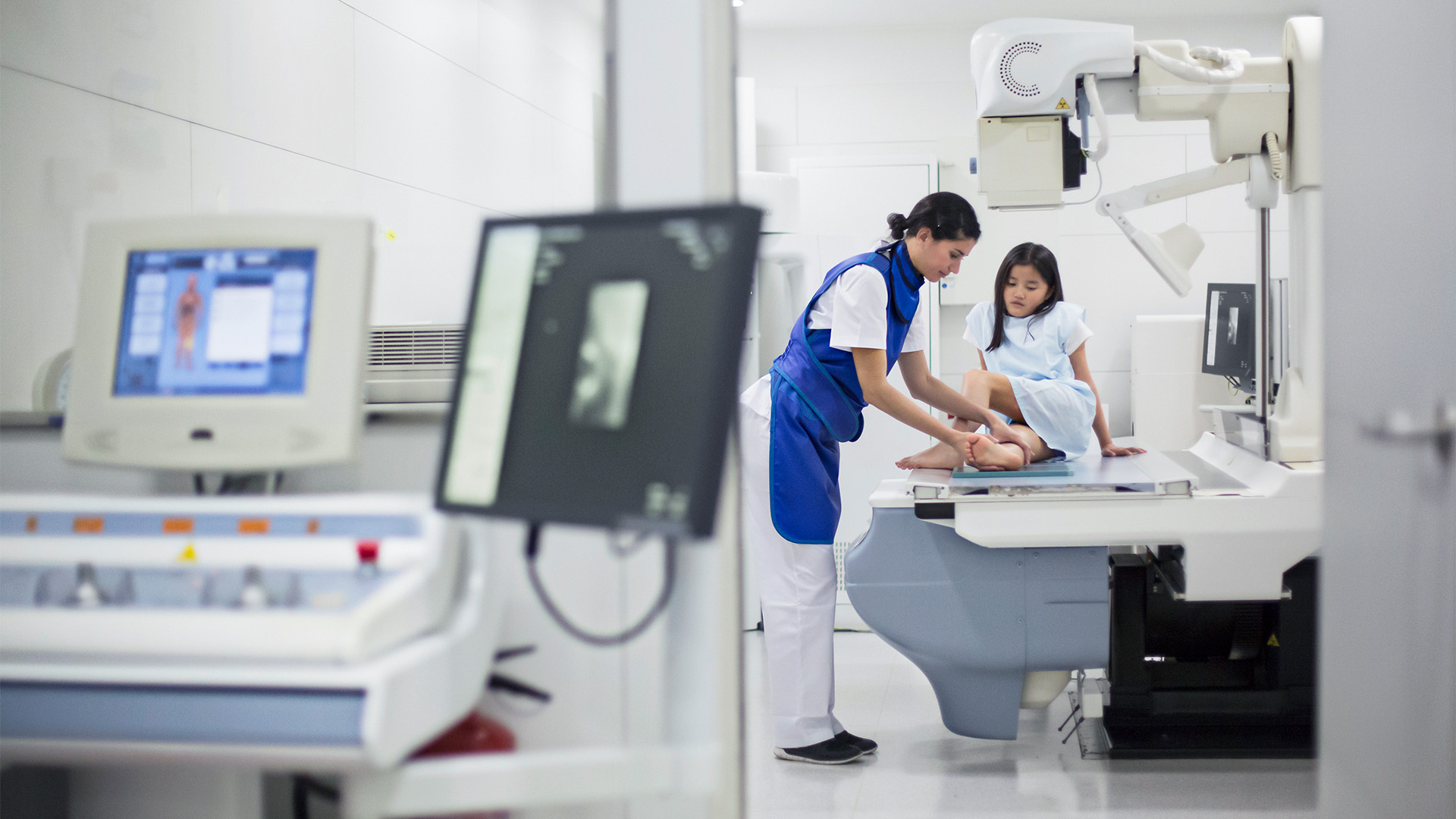
Combined Laboratory and X-Ray Technologists (CLXTs) are multi-skilled health professionals who perform core laboratory tests, general diagnostic radiography and electrocardiograms (ECGs) to support timely diagnosis and patient care. Assiniboine College’s Combined Laboratory and X-Ray Technology program prepares students with the knowledge, technical abilities and professional competencies to work in community hospitals and health centres in rural and remote communities across Manitoba.
This rigorous program blends classroom theory with extensive hands-on learning in on-campus labs, as well as clinical education experience. Students gain practical skills in specimen collection and handling, hematology, blood bank, clinical chemistry and urinalysis; master ECG acquisition and interpretation fundamentals; and learn radiographic patient care, positioning, image acquisition, and safe operation of equipment while focusing on quality, safety, interprofessional communication, and culturally responsive, patient-centered practice. The program includes 29 weeks of supervised clinical placement in healthcare facilities, building real-world confidence and competency across both disciplines.
A valid driver’s license and access to a vehicle is strongly recommended given the potential need to travel for clinical placement to rural and remote locations within Manitoba.
The next intake for Combined Laboratory and X-Ray Technology is September 2027. Following the 2027 intake, Combined Laboratory and X-Ray Technology and Medical Laboratory Technology will alternate annual intakes, with Combined Laboratory and X-Ray Technology offered every second year beginning in September 2028.
See also our Medical Laboratory Technology program.
Program Learning Outcomes
By the end of the program, graduates will be able to:
- Perform specimen procurement and processing (e.g., venipuncture, body fluids) using correct identification, labelling, handling, and transport protocols to ensure specimen integrity and patient safety.
- Apply foundational knowledge of anatomy, physiology, pathophysiology, radiographic principles, and medical terminology to interpret orders and support patient-centred laboratory and imaging services.
- Operate laboratory analyzers and equipment (e.g., centrifuges, microscopes) and general radiographic systems (CR/DR, fixed and mobile) in accordance with manufacturer instructions, institutional procedures, and safety standards.
- Perform pre-analytical, analytical, and post-analytical laboratory procedures within the CLXT scope (e.g., hematology, chemistry, transfusion science, urinalysis), by validating and correlating results and acting on critical values.
- Acquire general diagnostic radiographs and electrocardiograms (stationary or mobile units) by verifying identity/consent, positioning safely (including trauma/limited mobility/pain/distress), selecting technique factors, and evaluating image quality prior to transmission for interpretation.
- Integrate LIS/RIS/PACS (Laboratory Information System, Radiology Information System, and Picture Archiving and Communication System) and related informatics to register patients, manage orders, enter/verify results, transmit images, and maintain accurate, confidential, and secure records.
- Implement quality assurance and quality control across laboratory and imaging (e.g., equipment warm-ups/calibration, internal/external quality control, reject/retake analysis) to meet accreditation and continuous-improvement requirements.
- Communicate effectively with patients, families, and interprofessional teams to obtain cooperation, provide clear instructions, de-escalate distress, and contribute to coordinated care in diverse clinical and educational settings.
- Safeguard patients, self, coworkers, and the public by applying radiation protection (ALARA, dosimetry, pregnancy screening, shielding), infection prevention and control, and occupational health and safety practices.
- Practice ethical, culturally responsive, and trauma-informed care while upholding privacy and confidentiality, including culturally safe engagement with Indigenous and rural/remote communities.
- Evaluate laboratory and imaging workflow issues through critical thinking and informed decision-making.
- Coordinate concurrent laboratory and radiography duties in rural or remote practice by prioritizing STAT/urgent requests, meeting on-call responsibilities, maintaining inventory, and completing essential clerical tasks.
Success Factors
You might be a good fit for this program if you:
- Enjoy helping people and contributing to patient care
- Are comfortable working directly with patients of all ages
- Are comfortable working with blood and other bodily specimens
- Have strong attention to detail and value accuracy in your work
- Can follow strict safety protocols and procedures
- Are interested in medical science, anatomy, or diagnostic testing
- Communicate effectively and professionally in team environments
- Value ethical practices that maintain patient confidentiality and public safety
- Are calm under pressure and able to manage tasks in a busy clinical setting
- Are comfortable using computers, laboratory software, and automated equipment
- Are interested in a fast-paced, hands-on program
The program and industry environment often requires individuals to:
- Attend class in-person for full-time hours (27-36 hours depending on term)
- Work in clinical laboratories and diagnostic imaging areas with potential exposure to ionizing radiation, infectious materials, sharps, and chemical hazards.
- Demonstrate strong technical abilities including fine motor control, good manual dexterity, visual acuity, and accurate colour discrimination
- Stand or sit for extended periods and complete repetitive fine-motor tasks (e.g., phlebotomy, microscopy, image acquisition).
- Position, transfer and immobilize patients safely to obtain quality radiographic images while applying radiation-protection practices.
- Collect and process specimens directly from patients (venipuncture/capillary) and perform ECGs with professionalism, empathy and clear communication.
- Wear personal protection equipment (PPE) and follow infection-control and Workplace Hazardous Materials Information System (WHMIS) procedures; handle and dispose of hazardous and biohazardous materials appropriately.
- Follow precise protocols and perform tasks accurately under time pressure
- Maintain patient confidentiality and uphold professional codes of conduct while collaborating within interprofessional teams and diverse patient populations.
- Adapt to evolving technologies and rotating schedules (including early mornings, evenings, weekends, on-call)
- Be ready for rural/independent practice settings.
Admissions
We will begin reviewing applications for the CLXT program this fall and expect to make initial admission offers at that time.
Step 1
All step one requirements must be submitted at the time of application to be considered complete.
Academic Requirements
To be considered for admission, applicants must have completed Manitoba Grade 12 or equivalent, including the following required courses:
- English 40G/40S or equivalent with a minimum mark of 70%
- Pre-Calculus, Applied or Essential Math 40S or equivalent with minimum mark of 70%
- Biology 30S and Biology 40S or equivalent with minimum mark of 70%
- Chemistry 40S or equivalent with a minimum mark of 70%
Post-secondary level courses may be used to satisfy subject prerequisites.
If you received your education outside of Manitoba, please review the equivalent admission requirements: Interprovincial or International.
READY TO TAKE THE NEXT STEP IN YOUR EDUCATION JOURNEY?
Before starting your application, be sure to review the program checklist for detailed information and a clear understanding of the admission requirements. Now, let's begin your online application and join Assiniboine College!
DON'T MEET Academic REQUIREMENTS?
If you don’t meet academic requirements, visit our Centre for Adult Learning to upgrade courses.
English Language Proficiency
English is the language of instruction at Assiniboine. All applicants educated outside of Canada or in a country not on the test exempt list are expected to meet the English language proficiency requirements.
Competitive Entry
The Combined Laboratory and X-Ray Technology program has limited spaces; admission is competitive. The following items are required to be considered for admissions and will be evaluated in the competitive entry assessment.
CASPer © 2 Test Score
- Applicants will be required to take the CASPer © 2 test, an online situational judgment assessment. CASPer is designed to evaluate key personal and professional attributes such as communication, empathy, and problem-solving, which are important for success in healthcare fields.
- You can apply to your program before receiving your CASPer © 2 test score. Once you have applied to Assiniboine and receive your student ID number, register for the next available CASPer © 2 test date using your college student ID number.
- If you have not yet applied for your program, you can still take CASPer © 2, but you will not have a student ID number to provide during registration and can leave the field blank.
Letter of Intent
- Applicants will required to submit a letter of intent. This letter is an opportunity for applicants to share their interest in the program, their motivation for pursuing a career as a CLXT, and how their goals and strengths align with the field.
- View the Letter of Intent Writing Guide (PDF)
Step 2
The following will be required for admission into the program. All applicants must be willing and able to meet immunization, checks and certification requirements. These documents are not required at the time of application; however, applicants who are selected and receive a conditional offer of admission must submit all required documentation by the specified deadlines to secure their place in the program.
Immunizations, Checks and Certifications
Certifications:
- Proof of current certification in Basic Life Support (BLS) or Cardiopulmonary Resuscitation Level Health Care Provider (CPR-HCP)
Checks:
- Current Criminal Record Check (with Vulnerable Sector Check)
- Current Child Abuse Registry Check
- Current Adult Abuse Registry Check
Registry checks must be current (within 6 months).
In some instances, applicants with a criminal record or listed on the Child Abuse and/or Adult Abuse Registry may not be admitted to the program. If you fall into one of these categories, please contact the Dean of Health and Human Services prior to applying.
Immunizations:
- Measles, Mumps, and Rubella (MMR) Immunization Record or lab results showing immunity (positive antibody titres)
- Hepatitis B Vaccination Record showing all 3 doses or a positive Hepatitis B surface antibody titer. Students may attend if they are in progress toward completing the 3-dose series and have received at least one dose
- Varicella Vaccine
- Influenza and COVID-19 Vaccine (recommended)
- Polio Vaccine
- Tdap Adult Does (Tetanus, Diphtheria, and Pertussis)
- Tuberculosis (TB) Screening:
- 2-step Mantoux test (if this is the initial test)
- 1-step Mantoux test (for subsequent annual tests)
- Or a Chest X-ray (if applicable)
Continuous Admission
Applications are accepted throughout the year, and there is no specific deadline to apply; however, we have limited space available in each intake and acceptance of qualified applicants is offered continuously.
Applicants are encouraged to apply early and ensure their application is complete.
Careers & Connections
This program aims to prepare graduates for success on the national entry-to-practice exam, required for licensure with the College of Medical Laboratory Technologists of Manitoba (CMLTM). With licensure, graduates may pursue careers as Combined Laboratory and X-Ray Technologists across Manitoba.
Career Opportunities
Workplaces and Employers
- Rural Community Hospital and Health Centre (Shared Health Manitoba)
Difference Between Industry Roles
Healthcare services in Manitoba are dynamic, and staffing needs can change over time. If you have a specific location in mind, we strongly recommend connecting with the employer or facility directly to discuss local hiring needs and ensure your program planning aligns with potential employment opportunities.
| Role | Description |
| Medical Laboratory Assistant / Technician (MLA)* | Collects and prepares specimens Plays a critical frontline support role in the lab by collecting patient blood specimens, ensuring proper identification, and preparing samples for testing. Their work is essential for maintaining accuracy and workflow efficiency as errors at this stage can impact all downstream results. |
| Medical Laboratory Technologist (MLT) | Performs and interprets laboratory testing A highly trained diagnostics professional who performs manual and complex laboratory testing. Disciplinary areas include chemistry, histotechnology microbiology, hematology, and transfusion medicine. MLTs interpret data to produce reliable results for clinicians to make diagnosis and treatment decisions for patients. |
| Medical Radiological Technologist (MRT)* | Performs diagnostic imaging (X-ray) Specializes in diagnostic imaging, using equipment like X-ray to visualize internal structures. MRTs play a key role in identifying injuries, diseases, and abnormalities, often in urgent or acute care situations. They balance technical expertise with direct patient care while ensuring strict radiation safety standards, making them essential for timely, accurate diagnoses and patient safety. |
| Combined Laboratory & X-Ray Technologist (CLXT) | Performs both laboratory testing and X-ray imaging A versatile practitioner trained in both laboratory testing (hematology, chemistry, and blood bank) and diagnostic imaging (X-ray). CLXTs are especially critical in rural or smaller healthcare settings where access to multiple specialists is limited. Their dual skill set allows facilities to offer both lab and imaging services efficiently, ensuring patients receive timely diagnostics without needing to travel, thereby improving access to care. CLXTs serve the needs of rural communities for diagnostic services and are not typically hired in urban settings. |
*Not currently offered at Assiniboine College
Tools & Supplies
Program Checklists, Textbooks, and Supplies
A list of textbooks and supplies will be posted here once it is confirmed.
Assiniboine Bookstore
Textbooks, supplies and uniforms may be purchased at the Assiniboine Bookstore at the Victoria Avenue East Campus. Booklists, tool lists and supply lists are available from your school office 30 days prior to the start date of your program.
Technology Requirements
Students in this program are required to bring their own laptop for use on-campus. The laptop must meet the technical needs outlined by the program. Mac computing devices are not compatible with program software. See Technology Requirements for detailed information.
Courses & Costs
Costs
Estimated Program Costs
| Year 1 | Year 2 | |
|---|---|---|
| Credits | 55.0 | 39.0 |
| Tuition | $3,580 | $2,480 |
| Course Fees | $ 2,480 | $1,750 |
| Students' Association fees (including Health Premium) | $620 | $520 |
| Estimated textbooks, tools, and supplies | $1,690 | $0 |
All fees are estimated and subject to change without notice.
Courses
A full listing of courses and estimated costs will be posted here once it is confirmed.
Year 1 Courses
| Title | Credits/CEUs | Elective | Distance | PLAR |
|---|---|---|---|---|
Anatomy and Physiology (SCIE-0103)Corequisite: HLTH-0338 Medical Terminology This course provides an overview of human anatomy |
6 credit(s) | No | No | No |
Blood Sciences 1 (CLXT-0001)Prerequisite: HLTH-0338 Medical Terminology, SCIE-0103 Anatomy and Physiology, COMM-0457 Professional Practice, WRKP-0107 Lab Safety, MEDL-0001 Lab Fundamentals, MEDL-0002 Sample Collection & Handling In this course students develop skills in hematology testing using manual and automated techniques. Students evaluate scatter plots, interpret blood smears, maintain instrumentation, and correlate results with clinical data to support accurate diagnosis and patient management within safe and quality laboratory practice. |
6 credit(s) | No | No | No |
Chemistry 1 (CLXT-0002)Prerequisite: HLTH-0338 Medical Terminology, SCIE-0103 Anatomy and Physiology, COMM-0457 Professional Practice, |
6 credit(s) | No | No | No |
College Foundations (PEDV-0356)This course improves students' ability to navigate the college experience and environment, including student's rights, roles, and responsibilities. In this course, students reflect on their skills, attitudes, and expectations and develop learning strategies to help them to become successful, resilient, and self-directed learners. The course covers topics such as success in online learning, time management strategies, learning strategies, assessment taking strategies, academic integrity, information and digital literacy, and wellness, among others. It integrates elements of student orientation. |
0 credit(s) | No | No | No |
Electrocardiography (IMAG-0002)Prerequisite: HLTH-0338 Medical Terminology, |
3 credit(s) | No | No | No |
Imaging Fundamentals (IMAG-0003)Students build foundations in radiographic practice: patient identification and consent, communication, infection prevention, radiation protection, basic positioning concepts, exposure selection, digital workflow, documentation, and first-line quality control. Emphasis is on safe practice, professional scope, and collaboration to produce diagnostic images while safeguarding patients, colleagues, the environment, and data. |
3 credit(s) | No | No | No |
Imaging Science and Protection (IMAG-0004)Prerequisite: HLTH-0338 Medical Terminology, SCIE-0103 Anatomy and Physiology, COMM-0457 Professional |
6 credit(s) | No | No | No |
Lab Fundamentals (MEDL-0001)Corequisite: WRKP-0107 Lab Safety This course builds foundational laboratory competencies for health care practice. Students apply laboratory mathematics; prepare accurate dilutions and solutions; use glassware, plasticware, and manual or automated pipettes; operate common equipment; perform peripheral blood smears and urinalysis with microscopy; and uphold reagent management, documentation, and quality assurance. |
6 credit(s) | No | No | No |
Lab Safety (WRKP-0107)Corequisite: MEDL-0001 Lab Fundamentals This course provides foundational knowledge and practical guidelines for maintaining a safe working environment in the laboratory setting. Students will learn to identify and manage biological, chemical, and physical hazards in accordance with current occupational health and safety standards and legislation. Topics include infection prevention and control, proper use of personal protective equipment (PPE), WHMIS, safe specimen handling, emergency procedures, and workplace incident reporting. The course fosters a safety-focused mindset that encourages awareness and habits required to promote safety for self, colleagues, and patients in the medical laboratory setting. |
3 credit(s) | No | No | No |
Medical Terminology (HLTH-0338)Corequisite: SCIE-0103 Anatomy and Physiology, COMM-0457 Professional Practice This course introduces students to the fundamental principles of medical terminology used in healthcare settings. Emphasis is placed on understanding the structure, meaning and correct usage of medical terms through word roots, prefixes, suffixes, and abbreviations. Students will learn body system and pathological condition terminology relevant to the role of healthcare practitioners to support safe and accurate communication within the workplace. |
1.5 credit(s) | No | No | No |
Professional Practice (COMM-0457)Corequisite: HLTH-0338 Medical Terminology In this course, students develop communication, professional behavior, and ethical practice for healthcare settings. They practice interpersonal, verbal, and written communication for safe, respectful interactions with patients, colleagues, and other professionals. Topics include confidentiality, cultural competence, conflict resolution, teamwork, and regulatory and ethical standards for healthcare professionals. |
3 credit(s) | No | No | No |
Sample Collection & Handling (MEDL-0002)Corequisite: SCIE-0103 Anatomy and Physiology , HLTH-0338 Medical Terminology, WRKP-0107 Lab Safety, MEDL-0001 Lab Fundamentals, COMM-0457 Professional Practice This course provides students with the essential competencies in pre-analytical procedures required to safely and effectively collect, label, transport, and process biological specimens for laboratory testing. Emphasis is placed on patient identification, infection prevention and control, safety practices, phlebotomy techniques, specimen integrity, and the legal and ethical considerations in specimen collection. Students will gain hands-on experience in venipuncture, capillary collection, and specimen handling. |
6 credit(s) | No | No | No |
Year 2 Courses
| Title | Credits/CEUs | Elective | Distance | PLAR |
|---|---|---|---|---|
Advanced Practices (WRKP-0108)Prerequisite: SIMM-0001 Integrated Simulation Corequisite: PRAC-0475 Clinical Practicum - CLXT In this fully online seminar taken alongside clinical practicum, students integrate leadership, evidence-based practice, quality systems, risk management, and informatics across laboratory and radiographic services. Through case discussions and a practice-improvement project, students evaluate emerging technologies, strengthen ethical decision-making, and advance safe, patient-centered services in diverse care settings. |
3 credit(s) | No | No | No |
Blood Sciences 2 (MEDL-0003)Prerequisite: CLXT-0001 Blood Sciences 1 In this course students develop skills in hemostasis testing and blood product management. Students perform coagulation testing, calculate and interpret International Normalized Ratio, investigate unexpected results, and manage selection, storage, compatibility, and issue of blood components while documenting, troubleshooting, and responding to transfusion reactions within quality and safety frameworks. |
6 credit(s) | No | No | No |
Chemistry 2 (MEDL-0004)Prerequisite: CLXT-0002 Chemistry 1 In this course students advance clinical chemistry competence to complex methods and interpretation, including immunoassays and molecular methods. Students evaluate method performance, troubleshoot, and correlate endocrine, therapeutic drug, and toxicology with clinical information while maintaining instrument reliability, documentation, and quality systems for advanced patient testing. |
6 credit(s) | No | No | No |
Clinical Practicum - CLXT (PRAC-0475)Prerequisite: SIMM-0001 Integrated Simulation Corequisite: WRKP-0108 Advanced Practice In this clinical practicum students in the Combined Laboratory and X-ray Technology program apply laboratory and radiographic skills in supervised placements. Students perform specimen collection and laboratory analysis, patient positioning and image acquisition, documentation while practicing infection prevention, radiation protection, quality assurance, and workflow management to meet entry-to-practice expectations. |
3 credit(s) | No | No | No |
Imaging Equipment and QC (IMAG-0005)Prerequisite: IMAG-0001 Anatomy and Positioning, IMAG-0004 Imaging Science and Protection Corequisite: IMAG-0006 Pathology and Image Evaluation Students deepen understanding of imaging equipment operation, constancy testing, and troubleshooting. Students perform quality control procedures and records management through simulation, emphasizing interprofessional roles, informed consent, and emergency response pathways for safe, patient-centred care. |
6 credit(s) | No | No | No |
Integrated Simulation (SIMM-0001)Prerequisite: MEDL-0005 Point-of-Care Practices, MEDL-0004 Chemistry 2, MEDL-0003 Blood Sciences 2, IMAG-0006 Pathology and Image Evaluation, IMAG-0005 Imaging Equipment and QC This intensive simulation course prepares students in the Combined Laboratory and X-ray Technology program for clinical placement. Students integrate laboratory and radiographic practice through realistic scenarios, prioritizing workflow, patient identification, radiation protection, specimen handling, laboratory analysis, image critique, quality assurance, documentation, and communication under time-sensitive conditions. |
1 credit(s) | No | No | No |
Pathology and Image Evaluation (IMAG-0006)Prerequisite: IMAG-0001 Anatomy and Positioning, IMAG-0004 Imaging Science and Protection Corequisite: IMAG-0005 Imaging Equipment and QC Students study common pathologies visible on general radiographic examinations and refining image critique and post-processing. Students correlate clinical indications with positioning and technique adjustments, distinguish normal and abnormal findings, and plan repeat or additional imaging when necessary to support patient care and timely communication with the care team. |
6 credit(s) | No | No | No |
Point-of-Care Practices (MEDL-0005)Prerequisite: CLXT-0001 Blood Sciences 1, CLXT-0002 Chemistry 1 In this course students develop skills for safe and effective point-of-care testing across care settings. Students implement quality control, verify operator competency, manage connectivity and documentation, and evaluate bedside results in the context of patient assessment, infection prevention, and risk management. |
3 credit(s) | No | No | No |