All ITS services will be unavailable between 7 and 9 a.m. CDT on Sunday, October 25.
Read more


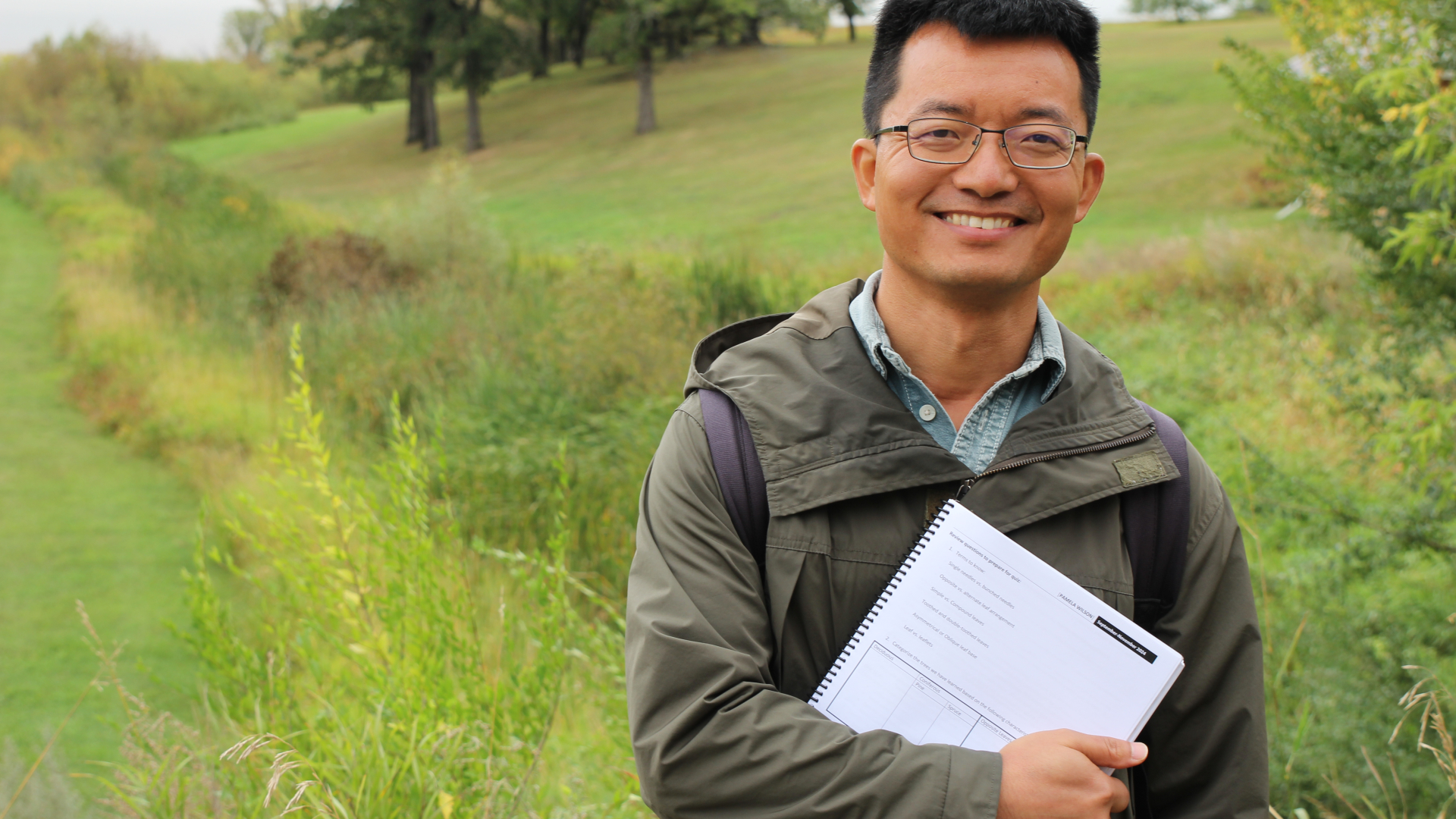
Environmental Resource Management
Overview
Assiniboine’s two-year Environmental Resource Management diploma program prepares graduates for careers in land reclamation, environmental stewardship, and land use rural planning emphasizing environmentally sustainable land management practices.
Students learn to work with landowners and other stakeholders to balance the realities of preferred land uses with conservation principles, environmental remediation, and environmental monitoring. Learning and assessing how soils and water, alongside plants and animals, impact an ecosystem and its diversity and health sets the stage for the program capstone projects. The capstone has students working with industry partners to find solutions to specific local environmental challenges in balance with the land uses in that area.
Ready to take the next step?
Fill out the form below to receive more information about our program and related events.
Program Learning Outcomes
- Document, maintain, and present technical information in various formats according to the purpose and audience.
- Ensure that all tasks are completed in compliance with applicable municipal, provincial, and federal laws and statutes including occupational health and safety standards.
- Using quantitative and qualitative tools to collect representative environmental samples, perform routine and specialized tests, and interpret results while adhering to standard methods.
- Integrate principles of ecology, geography, hydrology, soil science, and environmental ethics to develop a holistic understanding of human-environment interactions.
- Evaluate the environmental, social, economic, and personal impacts of various land use practices to make informed decisions that promote sustainable and responsible land
management. - Explore diverse Indigenous cultural perspectives and knowledge and the impacts of colonization to foster reconciliation, promote equity, and enhance sustainable environmental stewardship.
- Navigate the regulations and policies governing environmental management to develop strategies for sustainable and inclusive environmental decision-making.
- Evaluate the impact of climate change on land and water resources and develop adaptation strategies to mitigate risks and promote resilience.
- Implement restorative environmental management practices to heal ecosystems impacted by resource extraction and environmental degradation, while aligning with best practices for inclusive stewardship, responsible resource use, and biodiversity conservation.
- Participate in project planning, complete project tasks, and provide ongoing support or project management to ensure successful completion of projects.
- Communicate effectively with diverse stakeholders, including Indigenous communities, landowners, policymakers, community members, and industry professionals, to foster collaboration and support informed decision-making.
- Apply advanced techniques for water management, including water conservation, water quality monitoring, and water treatment.
- Evaluate the impact of climate change on land and water resources, and develop adaptation strategies to mitigate risks and promote resilience.
- Communicate effectively with diverse stakeholders, including landowners, policymakers, community members, and industry professionals, about land and water management issues and solutions.
- Apply principles of environmental ethics and sustainability to their work in land and water management
- Identify and address environmental risks and hazards associated with land and water management, using a proactive and preventive approach.
- Develop and implement effective strategies for rural planning and development, using principles of sustainability and community engagement.
- Identify and apply best practices for environmental stewardship, including the responsible use of natural resources and the promotion of biodiversity.
- Evaluate the effectiveness of different land and water management practices, using quantitative and qualitative methods, and continuously improve their skill
Examples of what jobs graduates from this program can do:
Graduates find jobs in conservation districts, non-governmental organizations, natural resource management organizations, agricultural organizations, resource extraction companies and all levels of government across the Prairies and beyond.
Success Factors
You might be a good fit for this program if you would enjoy:
- A career managing land and water resources, and ensuring their long-term sustainability
- Appreciate working outdoors in a variety of terrains and regions
- Learning how to incorporate sustainable land and water management practices across a variety of landscapes
- Collecting, organizing, and analyzing data to solve problems
- Interpreting and applying various acts, regulations, policies, and procedures
- Potential to work in a variety of urban and rural communities and different ecological settings
A valid driver’s license and access to a vehicle is strongly recommended given the need to travel for outdoor field lab activities and your work co-op placement.
The industry often requires individuals to:
- Be able and willing to travel.
- Possess a valid driver’s licence, and access to a vehicle.
- Work in outdoor settings in varied terrain.
- Ability to quickly problem solve and deal with stakeholder conflicts and complaints in a professional manner
- Have physical strength and stamina as well as the mobility and motor skills to undertake the required tasks.
- Operate equipment as required.
Admissions
Admission Requirements
- A complete Manitoba Grade 12 or equivalent
- English 40G/40S or equivalent
- Essential Mathematics 40S or equivalent
If you received your education outside of Manitoba, please review the equivalent admission requirements: Interprovincial or International.
English is the language of instruction at Assiniboine. All applicants educated outside of Canada or in a country not on the test exempt list are expected to meet the English language proficiency requirements.
READY TO TAKE THE NEXT STEP IN YOUR EDUCATION JOURNEY?
Start your online application today and join Assiniboine College!
DON'T MEET ADMISSION REQUIREMENTS?
If you don’t meet admission requirements, visit our Centre for Adult Learning to upgrade courses.
Careers & Connections
Career Opportunities
- Compliance (conservation)
- Land use planning
- Water quality and quantity management
- Environmental consulting
- Wildlife management
- Environmental health and safety
- Watershed districts
Connections
Assiniboine has a number of agreements with other colleges, universities and professional organizations, making it possible to apply credit taken at Assiniboine to programs at other institutions. For information on agreements, see Articulation Agreements.
Upon completion of this program, graduates will have the following certifications:
- First Aid
Tools & Supplies
Our largest lab is the great outdoors! You take full advantage of moderate spring and fall conditions to study watersheds, habitat, fisheries and wildlife. Other classes are scheduled in computer labs, chemistry labs, soils and crops labs and regular classrooms. You use GIS software, computers and environmental monitoring equipment to study air, water and land conditions.
Our classrooms, labs and shops are equipped with the necessary equipment that you need to make the most of your experience. However, there are some tools and supplies that you will need to purchase for personal use to help you with your studies. Much of what you purchase you’ll be able to use after you graduate and begin your career.
Program Checklists, Textbooks, and Supplies
Program Checklists:
Textbooks:
Supplies:
ASSINIBOINE BOOKSTORE
Textbooks, supplies and uniforms may be purchased at the Assiniboine Bookstore at the Victoria Avenue East Campus. Booklists, tool lists and supply lists are available from your school office 30 days prior to the start date of your program.
Technology Requirements
Students in this program are required to bring their own laptop for use on-campus. The laptop must meet the technical needs outlined by the program. MAC computing devices are not compatible with program software. See Technology Requirements for detailed information.
Courses & Costs
Costs
Estimated Program Costs (Domestic students)
| Year 1 | Year 2 | |
|---|---|---|
| Credits | 63.0 | 60.0 |
| Tuition | $4,300 | $3,810 |
| Course Fees | $2,160 | $2,090 |
| Students' Association fees (including Health Premium) | $670 | $640 |
| Estimated textbooks, tools, and supplies | $1,350 | TBD |
All fees are estimated and subject to change without notice.
Estimated Program Costs (International students)
| Year 1 | Year 2 | |
|---|---|---|
| Credits | 63.0 | 60.0 |
| Tuition | $18,090 | $16,730 |
| Course Fees | $2,160 | $2,090 |
| Students' Association fees (including Health Premium) | $670 | $640 |
| Required Health Insurance | $825 | $825 |
| Estimated textbooks, tools, and supplies | $1,350 | TBD |
All fees are estimated and are subject to change without notice. All international students must purchase health insurance. The college adds this fee to your student account and then sends your name and fee to the insurance provider on your behalf.
For more information, visit the Fees and Charges page.
Courses
To graduate with an Environmental Resource Management diploma, students must successfully complete 120 academic credits and 3 practical credits. The minimum passing grade for each course is indicated on the course outline. Course offerings are subject to change and may vary by intake.
YEAR ONE COURSES
| Title | Credits/CEUs | Elective | Distance | PLAR |
|---|---|---|---|---|
1st Aid - Emergency (HLTH-0030)Basic First Aid and CPR techniques taught in an interactive environment for individuals and employees who want an overview of First Aid and CPR in the workplace or home. The course covers skills needed to recognize, prevent and respond to cardiovascular emergencies for adults, CPR and other topics such as choking, airway and breathing emergencies, and prevention of disease transmission. This course meets the minimum regulations for Workplace Health and Safety for Basic First Aid. Participants who meet the required standard receive a nationally recognized certification that is valid for three years. |
0 credit(s) | No | No | No |
Aquatic Ecosystems (ENVR-0044)In this course, students are introduced to water resource terminology and technology. The course examines the interconnection of land and water and the interdependence of the activities upon these resources. Topics include watersheds, physical landforms, wetlands, riparian areas, water quality risks and issues, water controls and integrated planning. Students gain experience in sampling and evaluating water quality, and interpreting water analysis reports. |
6 credit(s) | No | No | No |
Co-op Work Placement - ENVRM (COOP-0043)Pre-Requisite: Cumulative weighted grade point average (CWGPA) of 2.0 or greater. This course requires a minimum of 600 hours of full-time, paid related work experience. The work placement is subject to prior approval of and monitoring by a designated faculty member. Credit is based on successful completion of the work placement. Work experience acquired prior to registration in the program is not eligible for this credit. |
3 credit(s) | No | No | No |
College Foundations (PEDV-0356)This course improves students' ability to navigate the college experience and environment, including student's rights, roles, and responsibilities. In this course, students reflect on their skills, attitudes, and expectations and develop learning strategies to help them to become successful, resilient, and self-directed learners. The course covers topics such as success in online learning, time management strategies, learning strategies, assessment taking strategies, academic integrity, information and digital literacy, and wellness, among others. It integrates elements of student orientation. |
0 credit(s) | No | No | No |
Communications and Technology (COMP-0571)This course will help students communicate better in the work world. Using technology as a communication tool, students will learn to write, present, organize and interpret data, and interact with the online world. |
6 credit(s) | No | No | No |
Environmental Field Lab (ENVR-0052)This course introduces students to the key features, challenges, and sustainable management of prairie agro-ecological landscape systems through various field activities, laboratory exercises, and guided site tours. Students will gain hands on traning by exploring interrelated agriculture and environment sites. The course focuses on the intersection between agriculture and the environment, covering topices such as: sustainable management practices, soil health and quality, biodiversity in agro-ecosystems, integrated pest management, as well as introducing technological field tools. |
6 credit(s) | No | No | No |
Environmental Fundamentals (SCIE-0101)This introductory course offers students a foundational understanding of the essential sciences biology, chemistry, and mathematics critical for natural resource management. Topics include basic biology concepts such as cell structure, microscopy, anatomy, physiology, and ecological interactions, as well as inorganic chemistry principles like matter, chemical reactions, and natural laws. Students develop core mathematical skills for data analysis and problem solving in the context of natural resource management. In addition to classroom learning, the course includes fieldwork and laboratory components where students will apply scientific methods to collect and analyze real-world data. |
6 credit(s) | No | No | No |
Environmental Legislation (ENVR-0042)This course introduces environmental and natural resources related legal principles and legislation in Manitoba. The course will review the rationale for environmental law, major legislation, significant relevant Indigenous law, environmental assessment and hearings. |
6 credit(s) | No | No | No |
Environmental Topics (ENVR-0046)Students explore current issues and trends on local, regional and global scales, which are related to an array of ecological, biological, agricultural, technological, economic, social, political and other issues associated with a growing human population. The focus is on how individually and collectively we impact, positively and negatively, the quality of our environment and human living conditions. Students are challenged to use a multi-perspective approach to assess natural resource issues. |
6 credit(s) | No | No | No |
Job Skills Development (PEDV-1012)Through a series of seminars, students build the skills necessary to secure and maintain employment. Topics will include resume writing, interview preparation and skills, networking, and understanding the workplace. |
0 credit(s) | No | No | No |
Natural Resources Technology (COMP-0572)This course provides learners with the concepts, principles and theories behind a variety of technology used by resource management organizations. Students will learn the applications of field-based and mapping technology used by the industry. Both spatial and non-spatial data systems will be covered providing fundamental knowledge to enable learners to interact and provide basic services to organizations and specialists. Topics will provide theory and hands-on proficiency in GPS and surveying equipment, data collection procedures, as well as data accuracy, analysis, and processing. Learners will use software to download, manage, summarize, map and report on field-collected data. |
6 credit(s) | No | No | No |
Plant Taxonomy (SCIE-0102)This course explores the diverse native flora of Manitoba's Aspen Parkland and Boreal Forest ecostystems, with an emphasis on using botanical terminology to identify and classify seed plants. Through a blend of classroom lectures, field studies, and hands on activiities, students will develop practical skills in recognizing common plant families and using taxonomic keys for identification. The course also covers topics such as habitat, ethnobotany, and plant ecological relationships to complement the study of plant identification and classification. |
6 credit(s) | No | No | No |
Soils and Water (ENVR-0037)Prerequisites: AGRC-0162 Agro-Ecology Field Laboratory, ENVR-0044 Aquatic Ecosystems |
6 credit(s) | No | No | No |
Terrestrial Ecosystems (AGRC-0291)Prerequisite: AGRC-0162 Agro-Ecology Field Laboratory |
6 credit(s) | No | No | No |
YEAR TWO COURSES
| Title | Credits/CEUs | Elective | Distance | PLAR |
|---|---|---|---|---|
Ecology (SCIE-0039)Prerequisites: AGRC-0291 Terrestrial Ecosystems, ENVR-0044 Aquatic Ecosystems, MATH-0072 Statistics for Life Sciences |
6 credit(s) | No | No | No |
Environmental Capstone (ENVR-0053)Building off of the Environmental Project Planning course, students receive direction and support to complete a capstone project that enables them to practice environmental management via integrated skills learning in previous courses. Students incorporate available concepts and tools that link environmental issues with strategies, product and service development, and public and external relations. |
3 credit(s) | No | No | No |
Environmental Contaminants (ENVR-0054)In this course, students study the sources, behavior, and impacts of environmental contaminants chemistry in soil, water, and air systems. The purpose is to provide students with the chemical basis for understanding the environment and environmental problems. Topics of study may include stratospheric chemistry and ozone depletion, ground-level air pollution, the natural and cultural greenhouse effect, heavy metal poisoning, acid rain and waste disposal. |
6 credit(s) | No | No | No |
Environmental Project Planning (ENVR-0055)In this project-based course students learn the basics of project management in the environmental industry. Students will research and structure their own project including determining project scope, time, stakeholders, costs, and risks. Students gain experience working with stakeholder groups and outlining roles and responsibilities in preparation for their capstone. |
3 credit(s) | No | No | No |
Environmental Statistics (MATH-0150)This course offers a comprehensive introduction to essential statistical concepts and techniques crucial for real-world data analysis. Students use technology, such as Excel, to explore the fundamentals of graphing, sampling distributions, probability, and inference, while also delving into regression and correlation. The course emphasizes practical applications, guiding learners through the principles of experimental design and analysis of variance. This hands-on approach ensures that students not only grasp theoretical concepts but also develop the skills to apply statistical analysis to real-world scenarios. |
6 credit(s) | No | No | No |
GIS Applications 1 (GEOS-0029)This course provides students with introductory concepts, principles, and theories behind Geographic Information System (GIS) fundamentals. The goal of this course is to understand GIS as a useful and flexible tool that can be used to address and solve a wide range of everyday resource management questions and problems. The course will discuss GIS theory and concepts while labs reinforce these concepts through hands-on experience. Topics may include cartography, data management, and basic remote sensing. |
3 credit(s) | No | No | No |
GIS Applications 2 (GEOS-0030)This course reinforces and continues forward from the concepts, principles, and theories introduced in GIS Applications 1. Additional skills are developed in Geographic Information System (GIS) fundamentals with the introduction of digital mapping. The goal of this course is to further understand the usefulness of GIS as a flexible tool that can be used to address and solve a wide range of everyday resource management questions and problems using labs and case studies. Topics may include digital cartography, analysis, and web mapping applications. |
3 credit(s) | No | No | No |
Land Use Planning (ENVR-0056)In this course, learners deepen their understanding of land use planning through practical, place-based examples in urban, rural, and agricultural settings. Emphasizing sustainable development, environmental stewardship, and community engagement, students explore planning issues from multiple perspectives. Learners develop skills in problem solving, positive communication, and conflict resolution, working independently and collaboratively to address real world challenges. Case studies examine the environmental, economic, and social dimensions of land use planning decisions. Oral and written presentations are used to communicate solutions effectively. |
6 credit(s) | No | No | No |
Natural Resources Field Lab (AGRC-0292)Prerequisites: AGRC-0162 Agro-Ecology Field Laboratory, COMP-0572 Natural Resources Technology |
6 credit(s) | No | No | No |
Reclamation and Remediation (ENVR-0036)Prerequisite: ENVR-0037 Soils and Water |
6 credit(s) | No | No | No |
Socio-Environmental Management (ENVR-0040)Ecological and social dynamics influencing natural resource and environmental management are studied via readings, case studies, and discussions. Students explore theories and methods used by natural resource professionals to engage stakeholders. |
6 credit(s) | No | No | No |
Wildlife Management (ENVR-0057)This course introduces the principles of wildlife and fisheries conservation and management, with a focus on current industry practices, procedures, and challenges. Topics may include aquatic and terrestrial species identification, population estimation, habitat requirements and management, methods for studying wildlife, techniques for capturing and handling wildlife, telemetry, natural and artificial regulation of animal populations, control of problem wildlife, the economic value of wildlife, and strategies for managing both biodiversity and harvest. Practical skills in wildlife observation and data collection are emphasized, along with the use of Geographic Information Systems (GIS) to analyze and manage wildlife data. |
6 credit(s) | No | No | No |