

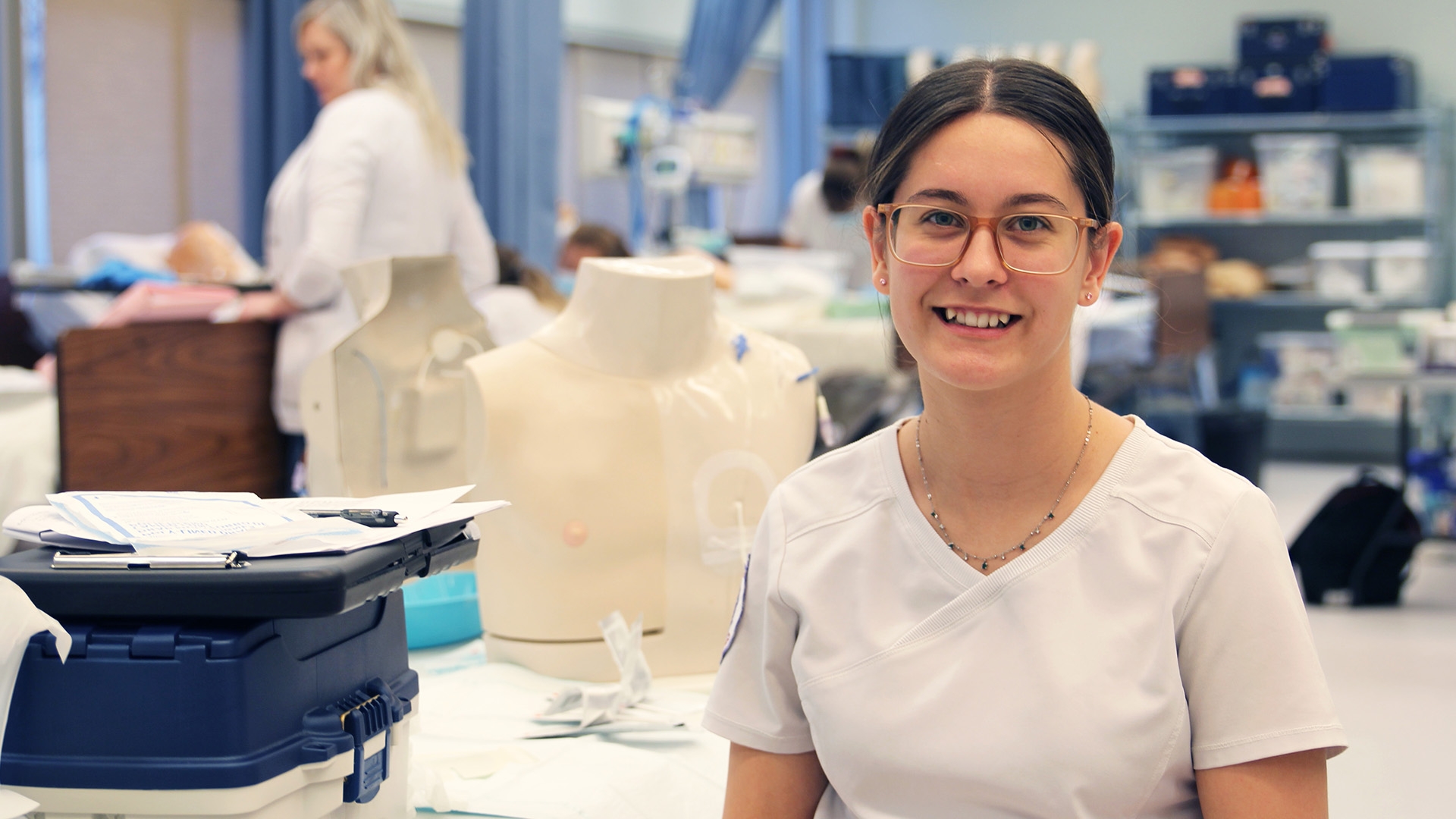
Practical Nursing
Overview
Assiniboine’s two-year Practical Nursing diploma program prepares graduates to meet the entry-level competencies of the College of Licensed Practical Nurses of Manitoba (CLPNM) and to be eligible to apply for licensure as a Practical Nurse in Manitoba.
Licensed practical nurses (LPNs) are regulated healthcare professionals who provide nursing care to clients in a variety of healthcare settings, including hospitals, personal care homes, and the community.
Keep me in the loop!
Fill out the form below to receive more information about our program and related events.
Program Learning Outcomes
- Integrate the CLPNM Standards of Practice and Conduct, Code of Ethics, and Entry-Level Competencies into the provision of nursing care.
- Adopt entry-to practice nursing professional behaviours including ethical practice, evidence-informed practice, personal management, and ongoing learning.
- Demonstrate effective interpersonal, therapeutic, culturally competent, and inter professional communication.
- Demonstrate safe practice in practical and clinical settings through provision of evidence-informed care, reporting, knowledge and documentation.
- Demonstrate effective care coordination related to client assessment, care planning, documentation, care management, client education, and the application of clinical judgment.
Examples of what practical nurses licensed by CLPNM can do:
- Develop effective interpersonal relationships with clients, members of the health care team, and other stakeholders.
- Provides holistic and compassionate care in collaboration with the health care team.
- Establish and maintain a safe and caring environment that supports clients to achieve optimal health outcomes across the lifespan.
- Maintain clear, concise, accurate, and timely records of nursing interventions and assessment findings.
- Implement and evaluate appropriate nursing interventions in accordance with assessment findings.
- Make accurate, timely, and appropriate clinical decisions to produce the best possible care outcomes for clients across the lifespan.
Success Factors
You might be a good fit for this program if you possess the following attributes:
- Positive attitude
- Physically and mentally healthy
- Strong study skills
- Well-developed interpersonal communication skills
- Problem solving skills/ability to think critically
- Professionalism
- Caring and compassionate
- Accountability
- Effective time management skills
A valid driver’s license and access to a vehicle is strongly recommended given the potential need to travel for practicum placement.
The industry and program environment require individuals to:
- Adhere to and apply the profession’s standards of practice and conduct, scope of practice, practice directions, and code of ethics, as well as organizational guidelines, policies, and procedures.
- Be accountable for your own decisions and actions and be committed to protecting the public.
- Be prepared to provide safe, competent, and ethical nursing care in a variety of settings to clients across the lifespan.
- Engage in self-reflection.
- Function in the presence of each of the following commonly encountered unavoidable environmental factors: distractions, unpredictable behaviour of others, noxious odours, disease agents, noise, and chemicals.
- Gain confidence in abilities through experience, and expand knowledge, skills, and judgment as you progress throughout your career.
- Perform and have control over physical actions to provide safe client care and to actively participate in educational activities, such as stand and maintain balance, possess manual dexterity, read, and lift.
- Practise within parameters defined by legislation, regulation, scope of practice, standards of practice and conduct, a code of ethics, practice directions and entry-level competencies.
- Recognize limitations and seek guidance from a valid, reliable resource, as well as follow the facilities Policies and Procedures.
- Work collaboratively as part of the interdisciplinary team to meet the holistic needs of the client.
- Be available to work all shifts, schedules, and conditions that are unique to the industry.
- Be responsible for all transportation to and from clinical units
Interested in exploring similar program options?
We've got you covered! Here's another great program option to consider.
Admissions
Admission Requirements
- A complete Manitoba Grade 12 or equivalent
- English 40G/40S or equivalent, with a minimum mark of 60% (English language waivers are not permitted)
- Pre-calculus, Applied or Consumer/Essential Mathematics 40S or equivalent with a minimum mark of 60%
- Biology 40S or equivalent with a minimum mark of 60%
- Successful completion of Preparation for Nursing (PEDV-0364). To view course availability for Preparation for Nursing and register, visit Instant Enrolment. To search for Preparation for Nursing, enter PEDV-0364 in the 'Course Code Number' field.
- Proof of current certification in Basic Life Support (BLS) or cardiopulmonary resuscitation, Health Care Provider level (CPR-HCP)
- Current criminal record vulnerable sector check (must be obtained by your local police/RCMP detachment)
- Current child abuse registry check
- Current adult abuse registry check
- CASPer® assessment is necessary to ensure your soonest consideration for acceptance.
This is a competitive entry program. Early preparation is strongly recommended due to how long collating all admission requirement documents can take (e.g. obtaining criminal/child abuse/adult abuse registry checks).
All items listed above are required at the time of application; CASPer® assessment is due by the application deadline.
If you received your education outside of Manitoba, please review the equivalent admission requirements: Interprovincial or International.
All applicants must meet the English language proficiency requirement specific to the Practical Nursing program. There are no test-exempt countries to this program.
READY TO TAKE THE NEXT STEP IN YOUR EDUCATION JOURNEY?
Before starting your application, be sure to review the program checklist for detailed information and a clear understanding of the admission requirements. Now, let's begin your online application and join Assiniboine College!
Apply now program application checklist
Applicants who are accepted into the program will also be required to:
- Use this Immunization Record to provide proof of up-to-date immunizations prior to practicum placement
- Apply for Student Practical Nurse (SPN) registration directly with the College of Licensed Practical Nurses of Manitoba (CLPNM). SPN registration must be obtained within six weeks of the program start date.
DON'T MEET ADMISSION REQUIREMENTS?
If you don’t meet admission requirements, visit our Centre for Adult Learning to upgrade courses.
Continuous Admission
Applications are accepted throughout the year, and there is no specific deadline to apply; however, we have limited space available in each intake and acceptance of qualified applicants is offered continuously.
Applicants are encouraged to apply early with an application inclusive of all the admission items above.
Competitive Entry Requirements
This is a competitive entry program, so there may be additional pieces you need to complete in addition to the Admission requirements. Early application to the program is strongly recommended.
COMPETITIVE ENTRY REQUIREMENTS
College of Licensed Practical Nurses of Manitoba (CLPNM)
College of Licensed Practical Nurses of Manitoba (CLPNM) has registration conditions for the practical nursing profession in Manitoba. Graduates of the Practical Nursing program at Assiniboine are required to pass the licensure exam to be eligible for membership with the CLPNM as a Licensed Practical Nurse.
Careers & Connections
Career Opportunities
- Hospitals
- Personal care homes
- Medical clinics
- Private agencies
- Community health programs
- Post-graduate educational opportunities for nurses in dialysis, operating rooms, oncology, palliative care, foot care clinics, management and intensive care units
Once Practical Nursing graduates have passed the licensure exam, they are eligible for membership with the College of Licensed Practical Nurses of Manitoba (CLPNM).
Get your Bachelor of Nursing at Assiniboine!
Assiniboine may soon be offering an Accelerated Bachelor of Nursing bridging program for Licensed Practical Nurses in Manitoba who wish to complete their Bachelor of Nursing. The intent is to provide LPNs with a flexible and tailored part-time and distance delivery so they can continue employment as they complete their degree.
If you’re interested in receiving more information about the program, please fill out the contact form below, and Assiniboine College will let you know as soon as there is more information to share, including the program start and other important dates as well as admissions requirement details.
Connections
This program is approved by the College of Licensed Practical Nurses of Manitoba (CLPNM). Students entering and/ or enrolled in the Practical Nursing program are eligible for registration for CLPNM as a student practical nurse (SPN).
Licensed Practical Nurses have postgraduate educational opportunities in the following: emergency, dialysis, operating room, oncology, palliative care, foot care, management, ICU and northern nursing.
Our connections with post-secondary institutions include the 2 + 2 program. Start at Assiniboine and get a two-year college diploma. Then, further your education at a partnering institution and receive credit towards related degrees/diplomas.
Assiniboine currently has a partnership with:
- Brandon University
Assiniboine has a number of agreements with other colleges, universities and professional organizations, making it possible to apply credit taken at Assiniboine to programs at other institutions. For information on agreements, see Articulation Agreements.
Note: The Manitoba credential is recognized across Canada.
Upon completion of this program, graduates will have the following certifications:
- Provincial Violence Prevention
- Workplace Hazardous Materials Information System (WHMIS)
- Personal Health Information Act (PHIA)
- N95 Mask Fit Testing
Canadian Armed Forces
This program is recognized by the Canadian Armed Forces Non-Commissioned Member Subsidized Training and Education Plan (NCMSTEP) program. Learn more about these opportunities and which programs at Assiniboine College are eligible through our CAF pathways page.
Tools & Supplies
Our classrooms and labs are equipped with the necessary equipment that you need to make the most of your experience. However, there are some tools and supplies that you will need to purchase for personal use to help you with your studies. Much of what you purchase you’ll be able to use after you graduate and begin your career. Nursing students will require a stethoscope and a watch with a second hand, as well as uniforms and appropriate shoes for practicum.
Program Checklists, Textbooks, and Supplies
Program Checklists:
Textbooks and Supplies:
- Textbook and Supply List - Practical Nursing
(applies to students who started the Practical Nursing program in September 2026 or earlier)
The Textbook and Supply list for January 2027 and May 2027 Intakes will be uploaded the week of November 23 - 27, 2026.
*Beginning in 2026–27, the Practical Nursing program includes updates to courses, credits, and fees. These changes reflect ongoing curriculum improvements and alignment with current healthcare and regulatory requirements.
ASSINIBOINE BOOKSTORE
Textbooks, supplies and uniforms may be purchased at the Assiniboine Bookstore at the Victoria Avenue East Campus. Booklists are available from your school office 30 days prior to the start date of your program.
Technology Requirements
Students in this program are required to bring their own laptop for use on-campus. The laptop must meet the technical needs outlined by the program. See Technology Requirements for detailed information.
Courses & Costs
Beginning in January 2027, the Practical Nursing program includes updates to courses, credits, and fees. These changes reflect ongoing curriculum improvements and alignment with current healthcare and regulatory requirements.
The College’s academic year runs from July 1 – June 30.
Depending on your program intake, your terms fall into the following academic years:
Intakes | Term 1 | Term 2 | Term 3 | Term 4 | Term 5 |
|---|---|---|---|---|---|
September | Year 1 | Year 2 | |||
January | Year 1 | Year 2 | |||
May | Year 1 | Year 2 | Year 3 | ||
Costs
Current Curriculum (applies to students who started the Practical Nursing program in September 2026 or earlier)
Term 1 | Term 2 | Term 3 | Term 4 | Term 5 | |
|---|---|---|---|---|---|
| Credits | 19.0 | 22.0 | 18.0 | 29.0 | 18.0 |
| Tuition | $1,270 | $1,400 | $1,150 | $1,840 | $1,150 |
| Course Fees | $480 | $640 | $460 | $600 | $290 |
| Students' Association fees (including Health Premium) | $120 | $130 | $110 | $170 | $110 |
| Estimated textbooks, tools, and supplies | $2,357 | $1,181 | $1,135 | $1,466 | $940 |
All fees are estimated and subject to change without notice.
New Curriculum (applies to students starting the Practical Nursing program in January 2027 or later)
Term 1 | Term 2 | Term 3 | Term 4 | Term 5 | |
|---|---|---|---|---|---|
| Credits | 31.0 | 29.0 | 29.0 | 30.0 | 2.0 |
| Tuition | $2,030 | $1,840 | $1,840 | $1,910 | $130 |
| Course Fees | $660 | $1,250 | $1,360 | $1,610 | $650 |
| Students' Association fees (including Health Premium) | $190 | $170 | $170 | $170 | $20 |
| Estimated textbooks, tools, and supplies | $3,200 | $991 | $2,423 | $557 | N/A |
All fees are estimated and subject to change without notice.
For more information, visit the Fees and Charges page.
Courses
Taking Courses in Advance
If you want to get a jump start on our Practical Nursing program, Assiniboine’s School of Nursing offers certain courses that you can take in advance of your program start.
IMPORTANT: Please note, taking courses in advance can impact (i.e. reduce) your funding options for the full Practical Nursing program. It is strongly suggested that you discuss your plan and options with the Financial Aid & Awards Office before making this decision.
All courses are offered through the School of Nursing, but are listed in the Centre of Continuing Studies’ eGuide; this course and program guide is issued three times per year, so read each edition to see the offerings for the fall, winter and spring/summer.
If you decide that taking courses in advance is right for you, follow these steps to see what courses are currently offered:
- Go to the Continuing Studies eGuide.
- Once on this page, open the guide and go to the “Working with People in Health” courses section and find the course you’d like to take. Make note of the course name and course number.
- Click on the checkmark icon beside the course name to enroll online through the college’s Instant Enrollment platform.
- Once on the Instant Enrollment site, you will need to enter the course name and/or course number in the “Course Code Number or Keyword in Title” search box. Note: if no search results appear after you have done this, it means all registration deadlines have passed and the course is no longer available for registration.
- If you have questions regarding registering for a course in advance of your program start, contact the School of Nursing at 204.694.7111 or [email protected].
Current Curriculum
To graduate with a Practical Nursing diploma, students must successfully complete 84 academic credits and 22 practical credits. The minimum passing grade for each course is indicated on the course outline. Course offerings are subject to change and may vary by intake.
New Curriculum
To graduate with a Practical Nursing diploma, students must successfully complete 113 academic credits and 8 practical credits. The minimum passing grade for each course is indicated on the course outline. Course offerings are subject to change and may vary by intake.
Term 1 - Current Curriculum
| Title | Credits/CEUs | Elective | Distance | PLAR |
|---|---|---|---|---|
Anatomy & Physiology 1 (SCIE-0005)Anatomy & Physiology 1 is the first course in a two-part series introducing the fundamental principles of human structure and function. This course examines the levels of organization in the body, from chemical and cellular levels to tissues, followed by an in-depth study of the integumentary, skeletal, muscular, nervous, and endocrine systems. Students will examine anatomical models, specimens, and conduct virtual dissections to enhance their understanding of body structures. Physiological processes such as movement, neural signaling, and hormonal regulation will be explored. |
6 credit(s) | No | Yes | No |
Canadian Nursing Principles (HLTH-0183)The purpose of this course is to introduce students to the discipline of practical nursing. Course concepts include foundations of nursing within the wellness model. |
3 credit(s) | No | No | No |
College Foundations (PEDV-0356)This course improves students' ability to navigate the college experience and environment, including student's rights, roles, and responsibilities. In this course, students reflect on their skills, attitudes, and expectations and develop learning strategies to help them to become successful, resilient, and self-directed learners. The course covers topics such as success in online learning, time management strategies, learning strategies, assessment taking strategies, academic integrity, information and digital literacy, and wellness, among others. It integrates elements of student orientation. |
0 credit(s) | No | No | No |
Interpersonal Communications (COMM-0038)In this course, learners explore effective interpersonal communication through self-examination, communication processes and the opportunity to practice by a variety of exercises. |
3 credit(s) | No | No | No |
Practicum 1 - NURSD (PRAC-0218)Prerequisites: SCIE-0005 Anatomy & Physiology 1, HLTH-0183 Canadian Nursing Principles, COMM-0038 Interpersonal Communications, PSSY-0026 Psychology, PSSY-0079 Sociology |
1 credit(s) | No | No | No |
Psychology (PSSY-0026)In this course learners begin to examine basic concepts and principles of individual behaviour. Nursing requires effective interpersonal skills and an ability to relate to people in a broad range of circumstances. |
3 credit(s) | No | Yes | No |
Sociology (PSSY-0079)This course explores the process of socialization and discusses how culture affects the totality of our lives. Learners examine social deviance and social control and look at the social dynamics of racial, ethnic and minority groups in our society. The processes and effects of social stratification are discussed. |
3 credit(s) | No | Yes | No |
Term 2 - Current Curriculum
| Title | Credits/CEUs | Elective | Distance | PLAR |
|---|---|---|---|---|
Anatomy & Physiology 2 (SCIE-0006)Prerequisite: SCIE-0005 Anatomy & Physiology 1 |
6 credit(s) | No | Yes | No |
Gerontological Nursing (HLTH-0012)This course introduces the learner to health, well-being and aging. It examines the age-related changes in all body systems in order to assist the learner in assessing and understanding the status of the gerontological client. Gerontological nursing in diverse settings is explored along with the legal and ethical considerations for nursing practice. |
3 credit(s) | No | No | No |
Human Growth and Development (HLTH-0007)Learners study the normal growth and development across the human lifespan and take into account the physical, cognitive, social, spiritual and emotional factors. |
3 credit(s) | No | No | No |
Nursing Arts and Assessment 1 (HLTH-0010)Prerequisite: PRAC-0218 Practicum 1 - NURSD |
6 credit(s) | No | No | No |
Nutrition (HLTH-0236)This course explores the relationship between food and its use by the human body for energy, structure and optimal health. Students study the body's normal nutritional needs and recommended daily dietary allowances for calories, protein, fats, carbohydrates, vitamins and minerals. Learners engage in course theory to consider important concepts related to medical conditions and to evaluate nutrition throughout the lifespan and in the prevention of diseases. |
3 credit(s) | No | Yes | No |
Practicum 2 - NURSD (PRAC-0219)Prerequisites: SCIE-0006 Anatomy & Physiology 2, HLTH-0012 Gerontological Nursing, HLTH-0007 Human Growth and Development, HLTH-0010 Nursing Arts and Assessment 1, HLTH-0236 Nutrition, PRAC-0218 Practicum 1 - NURSD |
1 credit(s) | No | No | No |
Term 3 - Current Curriculum
| Title | Credits/CEUs | Elective | Distance | PLAR |
|---|---|---|---|---|
Medical Microbiology (SCIE-0073)Medical Microbiology examines microbial structure, physiology, and interactions with humans to provide a foundation for understanding infectious diseases and the mechanism of action of antimicrobials. The course covers genetic changes that drive antimicrobial resistance and how the immune system defends against infections. Immunization strategies and their role in disease prevention are also examined. Students will examine microbial diversity, drug targets, genetic changes in resistance, immune defense, and analyse disease transmission, symptoms, prevention, and treatment. |
3 credit(s) | No | No | No |
Nursing Arts and Assessment 2 (HLTH-0015)Prerequisite: PRAC-0219 Practicum 2 - NURSD |
6 credit(s) | No | No | No |
Pharmacology 1 (HLTH-0184)Prerequisite: PRAC-0219 Practicum 2 - NURSD |
3 credit(s) | No | No | No |
Physical Health Assessment (HLTH-0011)Prerequisite: PRAC-0219 Practicum 2 - NURSD |
3 credit(s) | No | Yes | No |
Practicum 3 - NURSD (PRAC-0220)Prerequisites: SCIE-0073 Medical Microbiology, HLTH-0015 Nursing Arts and Assessment 2, HLTH-0184 Pharmacology 1, HLTH-0011 Physical Health Assessment |
3 credit(s) | No | No | No |
Term 4 - Current Curriculum
| Title | Credits/CEUs | Elective | Distance | PLAR |
|---|---|---|---|---|
Health Restoration & Reorg 1 (HLTH-0133)Prerequisite: PRAC-0220 Practicum 3 - NURSD |
6 credit(s) | No | No | No |
Health Restoration & Reorg 2 (HLTH-0134)Prerequisite: PRAC-0220 Practicum 3 - NURSD |
3 credit(s) | No | No | No |
Nursing Arts and Assessment 3 (HLTH-0186)Prerequisite: PRAC-0220 Practicum 3 - NURSD |
9 credit(s) | No | No | No |
Pharmacology 2 (HLTH-0185)Prerequisite: PRAC-0220 Practicum 3 - NURSD |
3 credit(s) | No | No | No |
Practicum 4 - NURSD (PRAC-0221)Prerequisites: HLTH-0133 Health Restoration & Reorg 1, HLTH-0134 Health Restoration & Reorg 2, HLTH-0185 Pharmacology 2, HLTH-0186 Nursing Arts and Assessment 3 |
8 credit(s) | No | No | No |
Term 5 - Current Curriculum
| Title | Credits/CEUs | Elective | Distance | PLAR |
|---|---|---|---|---|
Community Nursing (HLTH-0019)Prerequisite: PRAC-0221 Practicum 4 - NURSD |
3 credit(s) | No | No | No |
Mental Health (HLTH-0182)Prerequisite: PRAC-0221 Practicum 4 - NURSD |
3 credit(s) | No | No | No |
Professional Leadership (PEDV-0011)Prerequisite: PRAC-0221 Practicum 4 - NURSD |
3 credit(s) | No | No | No |
Senior Practicum (PRAC-0458)Prerequisites: HLTH-0019 Community Nursing, HLTH-0182 Mental Health, PEDV-0011 Professional Leadership |
9 credit(s) | No | No | No |
Term 1 - New Curriculum
| Title | Credits/CEUs | Elective | Distance | PLAR |
|---|---|---|---|---|
Anatomy & Physiology 1 (SCIE-0005)Anatomy & Physiology 1 is the first course in a two-part series introducing the fundamental principles of human structure and function. This course examines the levels of organization in the body, from chemical and cellular levels to tissues, followed by an in-depth study of the integumentary, skeletal, muscular, nervous, and endocrine systems. Students will examine anatomical models, specimens, and conduct virtual dissections to enhance their understanding of body structures. Physiological processes such as movement, neural signaling, and hormonal regulation will be explored. |
6 credit(s) | No | Yes | No |
College Foundations (PEDV-0356)This course improves students' ability to navigate the college experience and environment, including student's rights, roles, and responsibilities. In this course, students reflect on their skills, attitudes, and expectations and develop learning strategies to help them to become successful, resilient, and self-directed learners. The course covers topics such as success in online learning, time management strategies, learning strategies, assessment taking strategies, academic integrity, information and digital literacy, and wellness, among others. It integrates elements of student orientation. |
0 credit(s) | No | No | No |
Human Development & Family (NURS-0006)Human Development & Family explores development across the lifespan, including physical, cognitive, emotional, social, and sexual development, from the prenatal stage to late adulthood. Students will examine how heredity, environment, and social factors influence development. The course also explores family structures, relationships, and life transitions, including Indigenous family dynamics and impact on development. Key topics include interpersonal violence, elder abuse, and substance use disorders. |
6 credit(s) | No | Yes | No |
Indigenous Health & Wellness (NURS-0007)The Indigenous Health & Wellness course introduces the student to Indigenous worldviews of health and wellness, emphasizing relationship-based, culturally safe, and trauma-informed care. Students explore the historical, social, and political determinants that impact Indigenous health and examine how colonization, systemic racism, and intergenerational trauma influence wellness and access to healthcare. The course encourages self-reflection, cultural humility, and collaborative approaches rooted in Truth and Reconciliation, while developing foundational knowledge to support respectful, equitable nursing care for Indigenous clients, families, and communities. Grounded in the principle of Two-Eyed Seeing (Ethuaptmumk), the course invites the student to integrate both Indigenous and Western perspectives to enrich holistic and inclusive nursing practice. |
4 credit(s) | No | Yes | No |
Nutrition (HLTH-0236)This course explores the relationship between food and its use by the human body for energy, structure and optimal health. Students study the body's normal nutritional needs and recommended daily dietary allowances for calories, protein, fats, carbohydrates, vitamins and minerals. Learners engage in course theory to consider important concepts related to medical conditions and to evaluate nutrition throughout the lifespan and in the prevention of diseases. |
3 credit(s) | No | Yes | No |
Professionalism in Nursing (NURS-0016)Professionalism in Nursing examines the roles, attributes, and professional expectations of nurses within Manitoba's healthcare system, with an emphasis on the practical nursing profession. Students will explore professionalism, professional identity, and scope of practice while analyzing the core values, ethics, and competencies that guide nursing practice. Key topics include nursing theories, justice, equity, diversity, and inclusion, interprofessional collaboration, critical thinking, technology and informatics. By understanding the regulatory framework and expectations for Licensed Practical Nurses, students will develop the foundational knowledge and competencies required for client-centered care, education, research, advocacy, and leadership in nursing. |
6 credit(s) | No | No | No |
Psychology (PSYC-0002)Psychology is the scientific study of human thought, emotion, and behaviour. In this introductory course, students will explore foundational concepts, major theories, and research methods that help explain how people think, feel, and act. Emphasis is placed on the biological, cognitive, and social influences on behaviour, including topics such as brain function, learning, memory, perception, development, motivation, emotion, personality, mental health, and social interaction. |
3 credit(s) | No | Yes | No |
Sociology (SOCI-0002)Sociology provides the student with foundational sociological knowledge to understand how society, culture, and institutions shape individual and collective experiences. The student will examine topics such as identity, inequality, culture, socialization, and belief systems. The student will develop critical thinking skills and a deeper awareness of the social forces that influence human behaviour. |
3 credit(s) | No | Yes | No |
Term 2 - New Curriculum
| Title | Credits/CEUs | Elective | Distance | PLAR |
|---|---|---|---|---|
Anatomy & Physiology 2 (SCIE-0006)Prerequisite: SCIE-0005 Anatomy & Physiology 1 |
6 credit(s) | No | Yes | No |
Block Practicum 1 (PRAN-0001)Prerequisite: NURS-0010 Nursing Foundations; SCIE-0006 Anatomy & Physiology 2; NURS-0014 Physical Health Assessment; SIMN-0004 Physical Health Assessment Lab; NURS-0018 The Older Adult; NURS-0003 Essentials of Nursing 1; SIMN-0001 Nursing Competencies Lab 1 Practicum 1 is a 40-hour, long-term care clinical practicum. The student will apply basic nursing competencies acquired in the Nursing Competencies Lab 1 to clients in long-term care settings. Under the supervision of an experienced Clinical Education Facilitator (CEF), the student will apply the nursing process and learn how to integrate theoretical knowledge, critical thinking, clinical reasoning and judgement in the provision of nursing care to stable clients in predictable environments. Emphasis is placed on comprehensive, safe, coordinated, client-centered care. Reflective practice integrated with knowledge, best-practice, and clinical leadership is emphasized. |
1 credit(s) | No | No | No |
Essentials of Nursing 1 (NURS-0003)Essentials of Nursing 1 is a theoretical course designed to help students understand the principles and rationale behind basic nursing competencies. It equips students with the foundational knowledge and critical thinking needed to carry out nursing care safely, ethically, and confidently. Through the exploration of key concepts that guide the nursing process—including assessment, diagnosis, planning, implementation, and evaluation—students develop a professional framework for clinical decision-making and accountability. |
3 credit(s) | No | No | No |
Nursing Competencies Lab 1 (SIMN-0001)Prerequisite: PRAN-0001 Block Practicum 1 Corequisite: NURS-0004 Essentials of Nursing 2, PRAN-0002 Integrated Practicum 2 |
6 credit(s) | No | No | No |
Nursing Foundations (NURS-0010)Nursing Foundations introduces the foundational concepts, principles, and practices that underpin the role of the practical nurse in delivering client-centered care. This course emphasizes understanding diverse client needs, health outcomes, and the ethical responsibilities of nurses in promoting dignity and human rights. Students will explore key areas such as cultural competence, therapeutic communication, trauma-informed care, and interprofessional collaboration. Additionally, students will examine advocacy, collaboration, reflective practice, and the nursing process to address health inequities and ensure safe, ethical, and effective care across diverse settings. |
4 credit(s) | No | No | No |
Physical Health Assessment (NURS-0014)Physical Health Assessment (PHA) is a theory-based course that introduces the principles of comprehensive and focused health assessments across the lifespan. Students will learn the techniques, components, and processes of health assessments, including subjective and objective data collection, documentation, and clinical applications. Emphasis is placed on nursing process integration, communication, cultural considerations, and professional standards. This course provides the theoretical foundation for health assessment competency development in the PHA lab course. |
3 credit(s) | No | No | No |
Physical Health Assessment Lab (SIMN-0004)Physical Health Assessment (PHA) Lab is a lab-based course where students apply the knowledge gained from the PHA Theory course to develop competency in comprehensive and focused health assessments across the lifespan. Using appropriate interview and assessment techniques, including inspection, palpation, percussion, and auscultation, students apply the nursing process to assess, interpret key findings, and support safe practice. Emphasis is placed on therapeutic communication, documentation, client education. This course bridges theory to practice, preparing students for clinical application in nursing. |
3 credit(s) | No | No | No |
The Older Adult (NURS-0018)The Older Adult course introduces the student to the common age-related changes in the older adult. Emphasis is placed on the determinants of health and impact on aging. The course examines health promotion and disease and injury prevention with a focus on promotion and maintenance of physical, mental, spiritual health, as well as the prevention of disease and disability. The prevalence of chronic diseases in the older adult is discussed and how the role of culture, identity, and lived experience influence older adult’s response to chronic diseases. Health policy, legal, and ethical consideration for the older adult and nursing practice are examined. |
3 credit(s) | No | No | No |
Term 3 - New Curriculum
| Title | Credits/CEUs | Elective | Distance | PLAR |
|---|---|---|---|---|
Block Practicum 3 (PRAN-0003)Prerequisite: PRAN-0002 Integrated Practicum 2, SCIE-0073 Medical Microbiology, NURS-0012 Pathophysiology, NURS-0009 Mental Health & Substance Use, NURS-0017 Science of Pharmacology, NURS-0004 Essentials of Nursing 2, SIMN-0002 Nursing Competencies Lab 2 |
1 credit(s) | No | No | No |
Essentials of Nursing 2 (NURS-0004)Prerequisite: PRAN-0001 Block Practicum 1 Corequisite: SIMN-0002 Nursing Competencies Lab 2, PRAN-0002 Integrated Practicum 2 Essentials of Nursing 2 is a theoretical course that builds on foundational nursing knowledge to prepare students for nursing practice in acute care settings. Students deepen their understanding of the nursing process, including assessment, diagnosis, planning, implementation, and evaluation, while further developing critical thinking, clinical reasoning, and judgment. The course emphasizes ethical, safe person-centered care for clients with acute health conditions, and explores the scope of practice, regulatory standards, and interprofessional collaborative essential to acute care nursing. |
3 credit(s) | No | No | No |
Integrated Practicum 2 (PRAN-0002)Prerequisite: PRAN-0001 Block Practicum 1 |
1 credit(s) | No | No | No |
Medical Microbiology (SCIE-0073)Medical Microbiology examines microbial structure, physiology, and interactions with humans to provide a foundation for understanding infectious diseases and the mechanism of action of antimicrobials. The course covers genetic changes that drive antimicrobial resistance and how the immune system defends against infections. Immunization strategies and their role in disease prevention are also examined. Students will examine microbial diversity, drug targets, genetic changes in resistance, immune defense, and analyse disease transmission, symptoms, prevention, and treatment. |
3 credit(s) | No | No | No |
Mental Health & Substance Use (NURS-0009)Mental Health & Substance Use introduces the student to the concepts of mental health, mental illness, and substance use across the lifespan. The role of the determinants of health and colonization on individual’s mental health and well-being is examined. An historical overview is presented to situate the dramatic transformation in attitudes and perspectives of mental illness through time. The student will examine current legislation relevant to mental health practice, evidence-based interventions, stigma reduction, and recovery-oriented care. Emphasis will be placed on understanding common mental health conditions and substance use disorder across the lifespan. Using an interprofessional approach in clinical interventions, the student will learn how to apply the nursing process in the provision of culturally competent, safe, and ethical nursing care to clients and families across the lifespan. |
3 credit(s) | No | No | No |
Nursing Competencies Lab 2 (SIMN-0002)Nursing Competencies Lab 2 is the second in a series of laboratory courses designed to advance students’ clinical proficiency in delivering safe, ethical, and client-centered care in acute care settings. Building on foundational skills and theoretical knowledge, students engage more complex competencies in areas such as oxygenation, perfusion, wound management, urinary and gastrointestinal elimination, fluid and electrolyte balance, and medication administration. Through guided practice and structured skill demonstrations, students apply principles of pharmacology, pathophysiology, and health assessment to support clinical decision-making. Emphasis is placed on integrating the nursing process, inclusive of critical thinking, clinical reasoning and judgement, whole promoting reflective practice, professional communication, and accurate documentation. This course prepares students for practicum experiences in medical/surgical acute care environments. |
6 credit(s) | No | No | No |
Pathophysiology (NURS-0012)Pathophysiology of acute and chronic diseases provides nursing students with a comprehensive understanding of the pathological processes that underlie common acute and chronic health conditions across the lifespan. Emphasis is placed on the integration of pathophysiological concepts with clinical manifestations, diagnostic criteria, and evidence-informed treatment strategies. Students will explore the rationale for diagnostic testing and apply critical thinking, clinical reasoning and judgement to interpret findings and anticipate nursing interventions. The course prepares students to critically analyze disease progression and its impact on individuals, families, and populations. |
9 credit(s) | No | No | No |
Science of Pharmacology (NURS-0017)The Science of Pharmacology introduces the student to the topics of pharmacological principles, legal and ethical considerations, and safety of medication administration. Major drug classifications are studied based upon body systems including the mechanism of action, therapeutic, and adverse effects of medications. |
3 credit(s) | No | No | No |
Term 4 - New Curriculum
| Title | Credits/CEUs | Elective | Distance | PLAR |
|---|---|---|---|---|
Community and Population Health (NURS-0001)Community and Population Health introduces students to the foundational principles of public, community, and population health nursing, emphasizing social determinants, health disparities, and environmental influences on diverse populations. Students analyze the evolving role of Practical Nurses across a range of community, population, and public health settings. The course examines historical developments, evidence-informed practice, regulatory policies, and the ethical and legal dimensions of community-based care. Through a focus on health promotion, cultural competence, and interprofessional collaboration, students develop the ability to participate in assessing community health needs, support the planning of equitable interventions, and contribute to evaluating outcomes that promote culturally responsive and population-level nursing practice. |
3 credit(s) | No | No | No |
End of Life Care (NURS-0002)End of Life Care examines the principles of palliative and end-of-life care, emphasizing cultural safety, ethical decision-making, and interprofessional collaboration. Students will analyze diverse cultural, religious, and Indigenous perspectives on death and dying to enhance client-centered and family-centered care. The nurse’s role in symptom management, communication, ethical decision-making, MAID, and advanced care directives are emphasized. The focus is on promoting comfort, dignity, and quality of life while addressing psychosocial, spiritual, and bereavement needs. Students will also examine post-mortem care, legal documentation, and reporting. |
3 credit(s) | No | No | No |
Essentials of Nursing 3 (NURS-0005)Prerequisite: PRAN-0003 Block Practicum 3 Corequisite: SIMN-0003 Nursing Competencies Lab 3, PRAN-0005 Integrated Practicum 5, PRAN-0006 Integrated Practicum 6 Essentials of Nursing 3 is a theoretical course that builds on foundational nursing knowledge to prepare students for the complexities of client care in acute and specialized settings. With an emphasis on pediatric care, central venous access devices (CVADs), blood transfusions, pain management, perioperative care, and medical emergencies, students deepen their understanding of nursing interventions and safety considerations in these higher-acuity contexts. Students also advance their skills in applying the nursing process and performing safe, accurate medication administration across specialized clinical scenarios. This course supports the development of professional competence by integrating regulatory standards, ethical and legal considerations, and collaborative care principles relevant to practical nursing practice in complex care environments. |
3 credit(s) | No | No | No |
Integrated Practicum 4 (PRAN-0004)Prerequisite: PRAN-0003 Block Practicum 3 |
1 credit(s) | No | No | No |
Integrated Practicum 5 (PRAN-0005)Prerequisite: PRAN-0003 Block Practicum 3 |
1 credit(s) | No | No | No |
Integrated Practicum 6 (PRAN-0006)Prerequisite: PRAN-0003 Block Practicum 3 |
1 credit(s) | No | No | No |
Maternity & Newborn Nursing (NURS-0008)The Maternity & Newborn Nursing course introduces students to the principles of family-centered, culturally responsive, maternity and newborn care. Using the nursing process, students will develop critical thinking, clinical reasoning, and judgment to assess and manage maternal and newborn health. Emphasis is placed on prenatal, intrapartum, postpartum, and neonatal care, including maternal and fetal assessments, clinical manifestations, diagnoses, and evidence-based interventions. Students will explore common complications, high-risk pregnancies, and strategies to optimize health outcomes. The course integrates justice, equity, diversity, and inclusion (JEDI) principles and highlights the role of the interprofessional team in providing collaborative, compassionate, and ethical care to diverse families. |
3 credit(s) | No | No | No |
Nursing Competencies Lab 3 (SIMN-0003)Prerequisite: PRAN-0003 Block Practicum 3 Corequisite: NURS-0005 Essentials of Nursing 3, PRAN-0005 Integrated Practicum 5, PRAN-0006 Integrated Practicum 6 Nursing Competencies Lab 3 is the final course in the series of laboratory courses designed to further develop students’ clinical proficiency in delivering safe, ethical, and culturally responsive care in acute and specialized settings. Building on foundational and intermediate competencies, students demonstrate complex nursing interventions with a focus on managing pain, supporting surgical recovery, caring for clients with artificial airways, administering blood transfusions, and providing pediatric, labour and delivery, and newborn care. Students also develop proficiency in central venous access device (CVAD) therapy, including the safe administration of medications through CVADs. Through guided practice and structured demonstrations, students apply knowledge of pharmacology, pathophysiology, and health assessment to support clinical decision-making. Emphasis is placed on integrating the nursing process, inclusive of critical thinking, clinical reasoning and judgement, whole promoting reflective practice, professional communication, and accurate documentation. |
6 credit(s) | No | No | No |
Nursing Leadership (NURS-0011)Nursing Leadership equips students with the principles of leadership and change management essential for navigating today’s healthcare environment. This course prepares students to influence change, drive ethical and evidence-based care, and foster interdisciplinary collaboration. Students will explore leadership theories, formal and informal leadership roles, policy, healthcare law, and organizational structures while developing strategies to support professional practice. Through reflection and applied learning, students will build the confidence and competencies needed to lead effectively, advocate for quality care, and contribute to a safe, equitable, and client-centered practice environment. |
3 credit(s) | No | No | No |
Pediatric Nursing (NURS-0013)The Pediatric Nursing course explores the principles of pediatric nursing, focusing on family-centered, developmentally appropriate, and culturally responsive care. Students will apply the nursing process to promote health, safety, and wellness in pediatric population experiencing acute, chronic, and congenital conditions. Emphasis is placed on growth and development, common pediatric illnesses, ethical considerations, and interprofessional collaboration to optimize health outcomes. The course integrates justice, equity, diversity, and inclusion (JEDI) principles, ensuring students develop culturally competent, trauma-informed approaches to pediatric nursing. |
3 credit(s) | No | No | No |
Professional Nursing Autonomy (NURS-0015)Professional Nursing Autonomy explores the principles and frameworks that guide the development of autonomous nursing practice. This course supports students as they transition from learners to independent practitioners. Through critical reflection and applied learning, students will integrate self-management strategies to navigate role challenges, apply the nursing process to autonomous decision-making, and evaluate the impact of evidence-based practice on safe client care. Additionally, they will explore interprofessional collaboration as a foundation for professional growth and examine the regulatory, legal, and ethical dimensions of autonomy in nursing. |
3 credit(s) | No | No | No |
Term 5 - New Curriculum
| Title | Credits/CEUs | Elective | Distance | PLAR |
|---|---|---|---|---|
Block Practicum 7 (PRAN-0007)Prerequisite: PRAN-0004 Integrated Practicum 4, PRAN-0005 Integrated Practicum 5, PRAN-0006 Integrated Practicum 6 |
1 credit(s) | No | No | No |
Senior Practicum (PRAN-0008)Prerequisite: PRAN-0007 Block Practicum 7 |
1 credit(s) | No | No | No |
Locations
Permanent Locations
Assiniboine has four permanent sites in the province that offer the Practical Nursing diploma:
Victoria Avenue East campus | Brandon (Applications are open)
- Intakes are offered twice a year in January and September
- 35 seats are available for each intake
Portage campus | Southport (Applications are open)
- Intakes are offered every year in September
- 35 seats are available for each intake
Winnipeg campus | Winnipeg (Applications are open)
- Intakes are offered every year in January and September
- 35 seats are available for each intake
An additional one-time intake is being offered in May 2026 with 35 seats available.
Parkland campus | Dauphin (Applications are open)
- Intakes are offered every other year in September; the next intake is September 2027
- 25 seats are available for each intake
Rural Rotating Sites
In addition to our permanent program sites, Assiniboine offers in-community training known as rural rotating sites. These programs rotate throughout the province every two years. There are four rural rotating sites every second year - one rural rotating site per regional health authority (RHA) plus one site that is not fixed by RHA. For rural rotating sites, admission priority will be given to those who live in a rural community within 100 km of the site and/or those within the health region.
There are 25 seats per training site. Domestic students only.
Assiniboine has the following rural rotating training sites announced for 2026-27:
Otterburne | September 2026
- Start: September 8, 2026
- 25 seats are available
- Applications are open
Morden | January 2027
- Start: January 11, 2027
- 25 seats are available
- Applications are open
Beausejour | January 2027
- Start: January 11, 2027
- 25 seats are available
- Applications are open
Neepawa | January 2027
- Start: January 11, 2027
- 25 seats are available
- Applications are open
Upcoming Practical Nursing intakes at rotating rural locations beginning in 2028–29 will be announced in the coming months.
Fast Facts


Frequently Asked Questions
When is the next program information session?
Program information sessions are completely free to attend, and we invite you to bring a guest along as well. It's a good idea to register in advance so we know you're coming.
To find the complete schedule for our program information sessions and to RSVP, visit the program information session page.
Can I take the Practical Nursing program by distance?
No, the Practical Nursing program is not available by distance.
I do not meet admission requirements for the Practical Nursing program. How do I upgrade my Math, English or Biology?
Assiniboine offers high school courses at our Centre for Adult Learning in Brandon and Parkland Campus in Dauphin. Adult Learning Centres also exist in many communities and may offer the courses you need.
I do not have Grade 12 from Manitoba, what do I submit?
You should submit original transcripts that show an equivalent level of schooling.
- For other Canadian provinces, this means the last level of schooling required to gain a high school diploma, but it must include English, Math and Biology at the Grade 12 level.
- For those educated outside of Canada, please refer to the Chart of Admission Requirements for Country. This chart describes the educational requirement for many countries.
If you don't have a Grade 12 or equivalent, you will need to upgrade prior to applying. Assiniboine offers high school courses at our Centre for Adult Learning in Brandon and Parkland Campus in Dauphin. Adult Learning Centres also exist in many communities and may offer the courses you need.
I don't have 60% in one of the required Grade 12 courses (English, Mathematics, or Biology), can I apply?
A first-year undergraduate course in English, mathematics or biology with a minimum grade of C would also be acceptable. You’ll need to submit your university transcript from a recognized institution (public, not private) with your application. If you have successfully completed Assiniboine’s SCIE-0005 Anatomy & Physiology 1 course, it will be accepted in place of Biology 60% or higher.
If you are enrolled in upgrading at an adult learning centre, you may submit an application once you are enrolled in the admission requirement courses. You must provide proof of enrolment in these courses from your school with your application. You will also have to provide an official original final transcript once you have completed them. Your final transcript must show 60% or higher in the admission requirement courses.
Assiniboine offers high school courses at our Centre for Adult Learning in Brandon and Parkland Campus in Dauphin. For more information, visit www.assiniboine.net/mshs. Adult Learning Centres also exist in many communities and may offer the courses you need.
I'm currently taking high-school courses, can I apply?
If you are in high school or upgrading at an adult learning centre, you may submit an application once you are enrolled in the Grade 12 (40G/40S) admission requirement courses. You must provide proof of enrolment in these courses from your school with your application. You will also have to provide an official original final high school transcript once you have graduated. Your final transcript must show 60% or higher in the admission requirement courses.
Why do I need a current criminal record vulnerable sector check, child abuse registry check and adult abuse registry check while I am taking the program?
Many agencies where students are placed for practicum experience require that students disclose convictions for any offences. In some instances, applicants with a criminal record may be unable to complete the program. Applicants listed on the Child Abuse Registry and/or Adult Abuse Registry will be unable to complete the program if they require practicum experiences involving persons in care. If you fall into one of these categories, please contact the School of Nursing prior to applying.
What does the competitive entry process look like?
In the competitive entry process, applicants will be selected on the basis of three criteria namely, college eligibility, program eligibility, and application selection. Please refer to the competitive entry page accessed from www.assiniboine.net/admissions for more information about application selection.
Do I need to prove English language proficiency (ELP)?
If you were educated in English in Canada, you generally do not need to prove English language proficiency. However, you should refer to the specific requirements for the Practical Nursing program on our PN ELP webpage to ensure you meet the minimum requirements.
If you were educated outside of Canada, you must read the PN ELP information and submit documentation with your application that proves your English language proficiency. There are no test-exempt countries.
What is CASPer testing?
We use the CASPer test to obtain an assessment of your personal competencies as an applicant. Find more information on our CASPer information page. You can also read more about CASPer testing here: takecasper.com/faq
Where can I take CPR training?
Many applicants choose to complete the required CPR training at the necessary HCP (Health Care Provider) or BLS (Basic Life Support) level through St. John Ambulance, Canadian Red Cross, Heart and Stroke Foundation, Continuing Studies at Assiniboine or other reputable organizations that offer in-person CPR training.
When will I know if I am accepted to the Practical Nursing program?
Applications submitted are assessed for admission requirements and will receive a response via email within two to four weeks of submission.
Admission decisions are being made continuously, and some applicants who rank highest are offered early acceptance, whereas others may not hear until closer to the start date, pending available seats at that time.
I am a permanent resident; can I apply to the Practical Nursing program?
Yes, you must include a copy of your valid Permanent Resident card with your complete application.
I was educated outside of Canada, what are the requirements? Can someone assess my transcripts to tell me if I am eligible to apply?
We do not pre-assess prospective students documents prior to the submission of a complete application. For any applicant, including those educated outside of Canada, we are looking for at least 12 years of formal education, including language arts (equivalent to Manitoba’s English 40S), math, and biology, at the 12th year level or later, with the minimum grade of 60%. It depends on your own personal education as to whether or not any upgrading would be required before applying. If you don’t feel that you have the required 60% or equivalent, you should enroll in upgrading at the high school or post-secondary level, to ensure that your application can still be considered.
Can I apply to more than one location?
Yes, you can apply to more than one location. You will need to submit a complete online application and the application fee for each location. If accepted, you must be prepared to take the entire program at the location you are accepted to.
I am planning to apply to the Practical Nursing program, but haven’t submitted my application yet. Will the changes in admission requirements have any impact on me?
If you have successfully completed the Math for Nurses course (MATH-0014) and you apply to start the Practical Nursing program prior to June 30, 2026, then your Math for Nurses course credit will be valid for application to the program.
If you have successfully completed the Math for Nurses course (MATH-0014) and you apply to start the Practical Nursing program after June 30, 2026, then you will be required to complete the Preparation for Nursing (PEDV-0364) course.
If you have not taken the Math for Nurses course (MATH-0014), and it is after June 30, 2023, you will be required to take the Preparation for Nursing (PEDV-0364) course.
I did not successfully complete the Math for Nurses (MATH-0014) course and it is after June 30, 2023. Do I need to complete the Preparation for Nursing (PEDV-0364) course or can I take the Math for Nurses (MATH-0014) course over again?
If you are unsuccessful in the Math for Nurses course (MATH-0014) and it is after June 30, 2023, you will have to register in the Preparation for Nursing course (PREP-0364) and successfully complete this course in order to submit your application to the nursing program.
I have started the Math for Nurses (MATH-0014) course prior to July 1, 2023. Do I need to complete the Preparation for Nursing (PEDV-0364) course as well?
No. If you have registered to start the MATH for Nurses course (MATH-0014) before July 1, 2023, you have the opportunity to complete the course within the allotted course delivery timeframe.
I successfully completed the Math for Nurses (MATH-0014) course and received my credit. Do I need to complete Preparation for Nursing (PEDV-0364) as well?
If you have successfully completed the Math for Nurses course (MATH-0014) and you apply to start the Practical Nursing program prior to June 30, 2026, then your Math for Nurses course credit will be valid for application to the program.
If you have successfully completed the Math for Nurses course (MATH-0014) and you apply to start the Practical Nursing program after June 30, 2026, then you will be required to complete Preparation for Nursing (PEDV-0364).
What immunizations are required and when do I need them for the Practical Nursing program?
Please note that Practical Nursing students are required to complete all immunizations. Use this Immunization Record to provide proof of up-to-date immunizations prior to practicum placement.
When you receive a letter from the Admissions department indicating your acceptance, you should begin the process of obtaining your immunizations, which will need to submit to the Practicum Coordinator ([email protected]).
Note to applicants requiring the Hepatitis B immunization: This immunization requires three doses spaced a number of months apart and requires a minimum of 6 months to complete. Your record can be submitted after you've received the 1st injection unless you are receiving the 2nd or 3rd injection prior to your program start date.
I have been conditionally accepted or placed on standby and asked to submit official transcripts, but I already provided uploads with my application. Why are these not considered?
Initial assessments are made based on transcripts uploaded to the online system; however, original official transcripts must be sent to our Admissions office to verify your records.
Please mail to the Registrar’s Office (1430 Victoria Ave E, Brandon, MB R7A 2A9).
We accept electronic copies as official, only if they are sent to us directly from the school you attended to [email protected].
I am accepted into the Practical Nursing Program, can I defer to a different intake?
No. If you are accepted and choose not to attend, you will be required to apply the following year.
Only those with medical requests from their doctor can be considered by the Registrar.
Can I take courses before I start the Practical Nursing program?
A few Term 1 and Term 2 courses are available by distance or as evening classes. Taking courses in advance could impact (reduce) your funding options for the full program. It is strongly suggested you discuss this with the Financial Aid & Awards Office before making this decision.
Can I obtain credit for previous education for the Practical Nursing program?
Accepted students can apply for assessment for credit for previous education once they have received their official acceptance letter for their program and start date. See the policy, procedure, and application for credit form. Courses must have been taken from a recognized institution in Manitoba. Previous education will be reviewed based on the completion date and content relevance.
To submit a request for transfer credit, email the form to [email protected].
If I start the Practical Nursing program at one campus, can I transfer to another campus later? (e.g. I'm from Winnipeg; can I start in Portage and transfer to Winnipeg in a later term?)
No, please apply to the campus where you are prepared to take the entire program.
What are the scheduled hours for Practical Nursing classes?
Classes may be scheduled anytime between 8 a.m. to 5 p.m., Monday through Friday. However clinical practicum may be scheduled at various times of day and various shifts including evenings, nights and weekends. Those students with young children will need to plan for flexible child care arrangements.
Can I choose where I complete my practicum?
No, you must plan to do practicums in the location planned for your campus.
Where and when will the next Practical Nursing rural program be held?
Please refer to the Locations tab on this program page for details on dates and locations for the rural rotating sites.